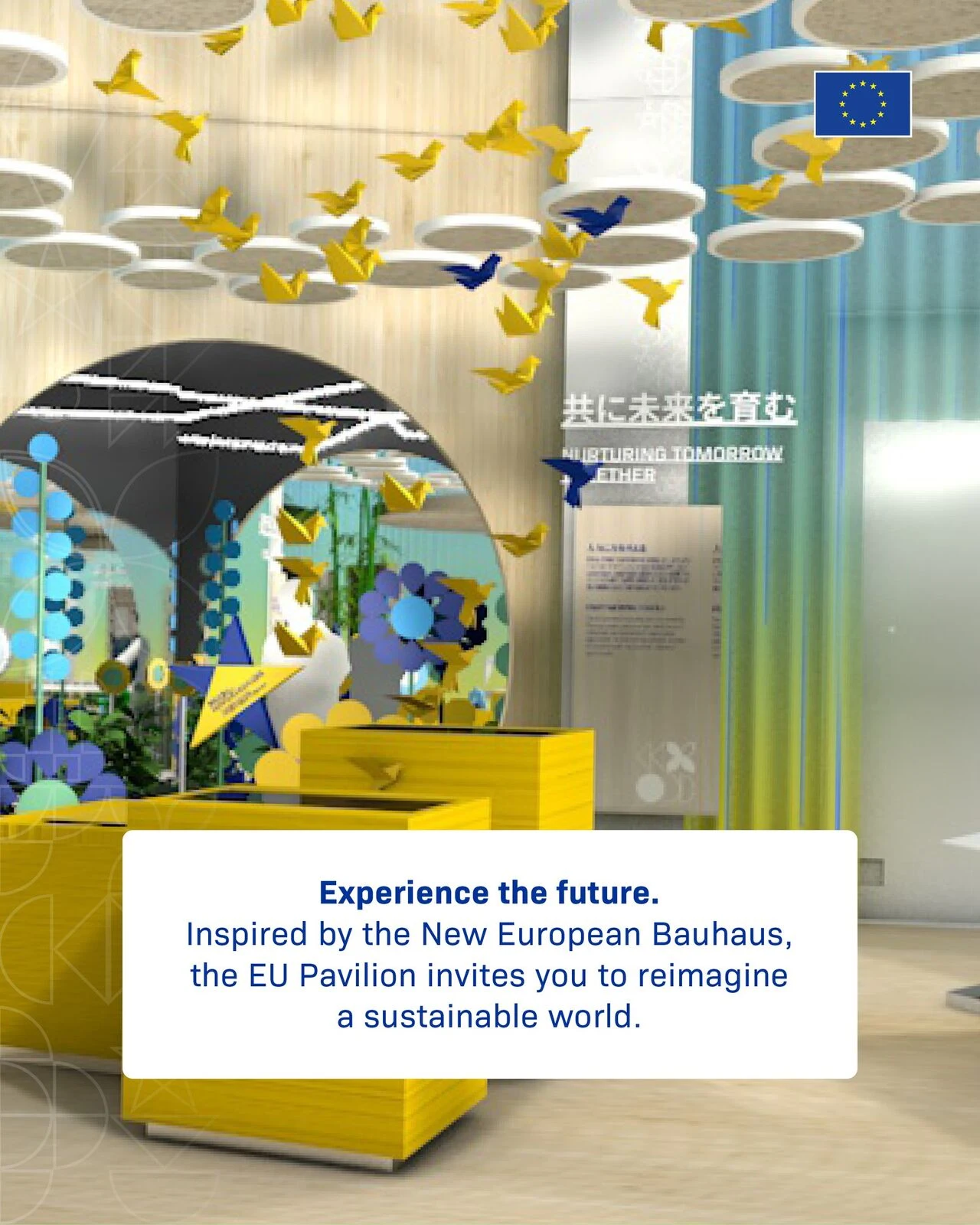
NEST, ENTROPIC's research into façades for urban biodiversity, has been selected for the New European Bauhaus digital exhibition at the European Union Pavilion at Expo Osaka 2025. Chosen by the Joint Research Centre alongside Biosphere Solar and ToGather Homes to present New European Bauhaus innovation, the initiative brings an architectural-scale question into a global exchange: who else could inhabit the surfaces of our cities?
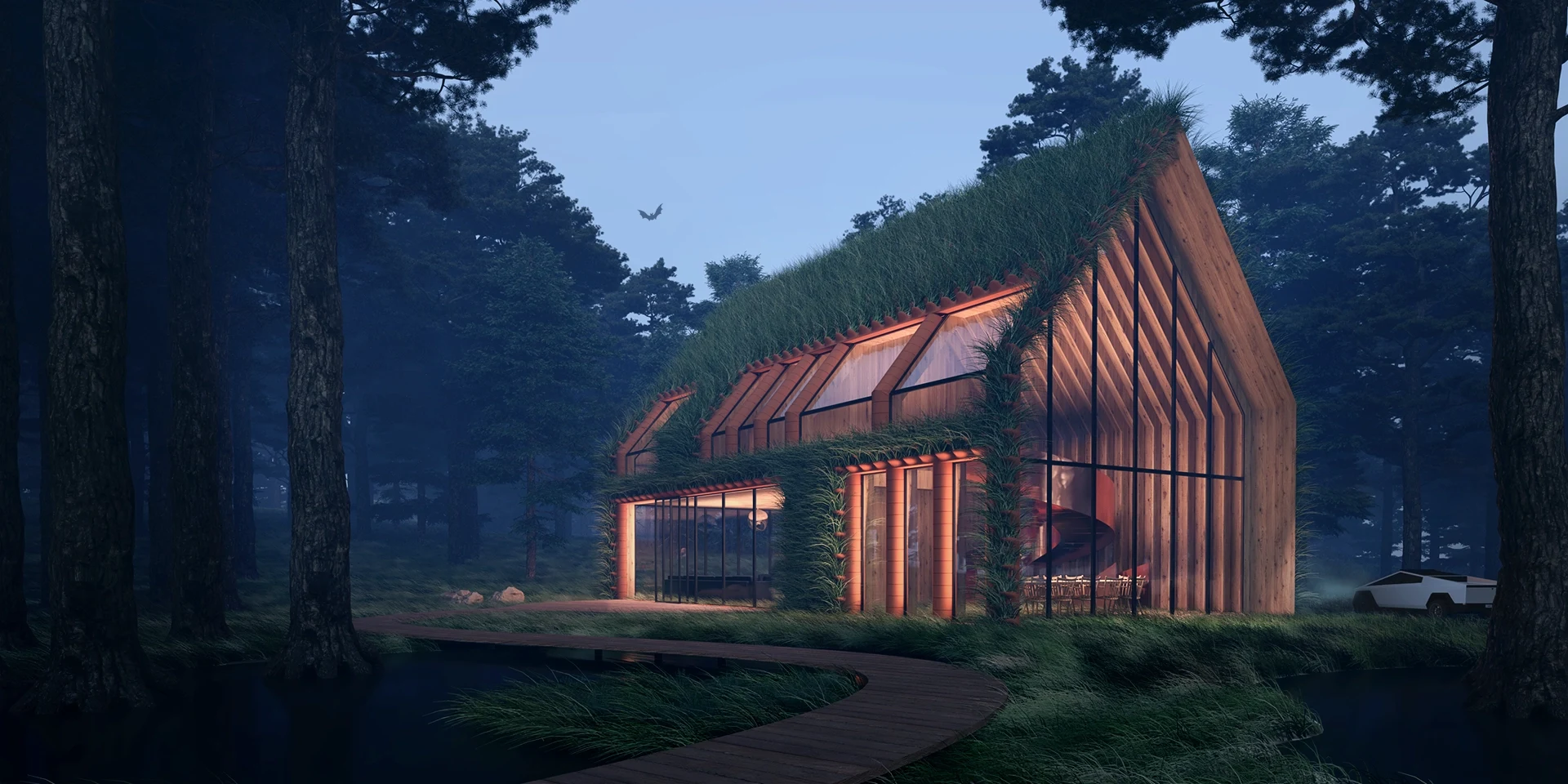
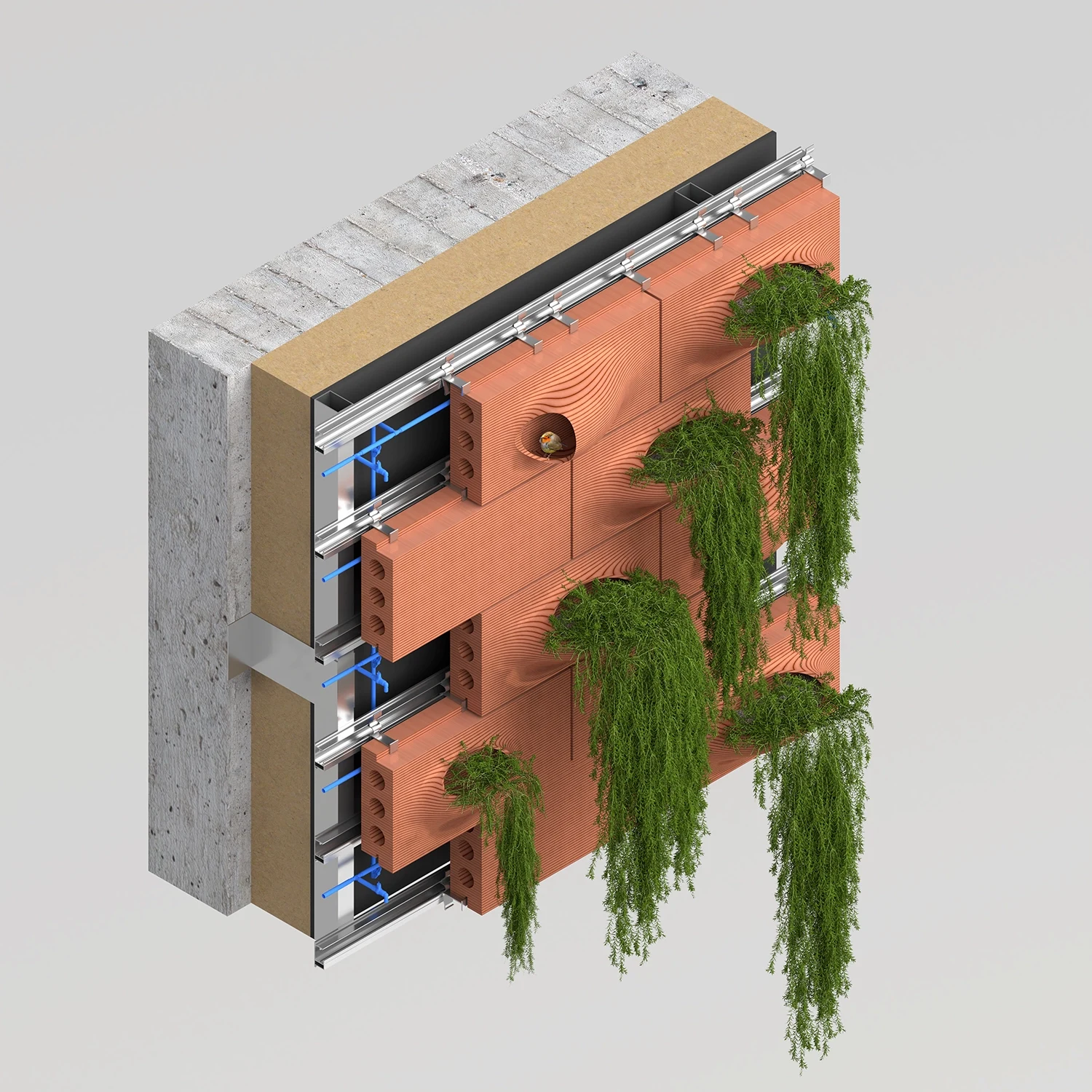
The research reconsiders the building envelope as a place of coexistence. Ceramic and clay components offer a family of different forms, with planting pockets and nesting cavities conceived as part of the façade itself. Architecture provides the framework, while the intended habitats give individual modules a purpose beyond enclosure or decoration.
Developed by Magdalena Mróz and Geoffrey Eberle, NEST moves between the scale of a fabricated component and the wider urban landscape. Its modular approach investigates opportunities in new construction and existing buildings, asking how everyday architectural decisions could make room for other species within places already shaped by people.
The Osaka presentation extends that inquiry into an international discussion about sustainable, beautiful and inclusive environments. For ENTROPIC, the selection is an opportunity to share material research as an architectural proposition, connecting ecological thinking with the visible and tactile fabric of the city. We thank the EIT Community New European Bauhaus and the Joint Research Centre for bringing this work into the Expo programme.
Explore NEST · EIT's official Expo selection report