Approach
Approach.
Challenge
the expected.
We believe the future of architecture lies in the relationships it creates: between people, nature and culture. Entropy is our starting point — the dynamic potential that emerges when different forces meet. We turn that potential into new possibilities for buildings, landscapes and cities.
Begin with
what is here.
Nature is more than an image to borrow. We look at how landscapes hold water, create shade and adapt over time, asking what these relationships can teach us about buildings and cities.
Local vernaculars carry knowledge too: how a courtyard makes shelter, how a threshold supports gathering, how materials respond to climate. We seek to learn from this knowledge and from contemporary ways of living, rather than repeat a regional style.
Question the brief.
We look beyond the first answer. Constraints can reveal an unexpected connection, a shared resource or a different way of using space.
Connect the scales.
Architecture, urbanism, landscape, infrastructure and interiors inform one another. We look for the relationships that make their combined effect more meaningful.
Design for change.
We design for a future we cannot fully predict. Adaptable spaces, room for nature and opportunities for shared use allow a place to evolve with the lives around it.
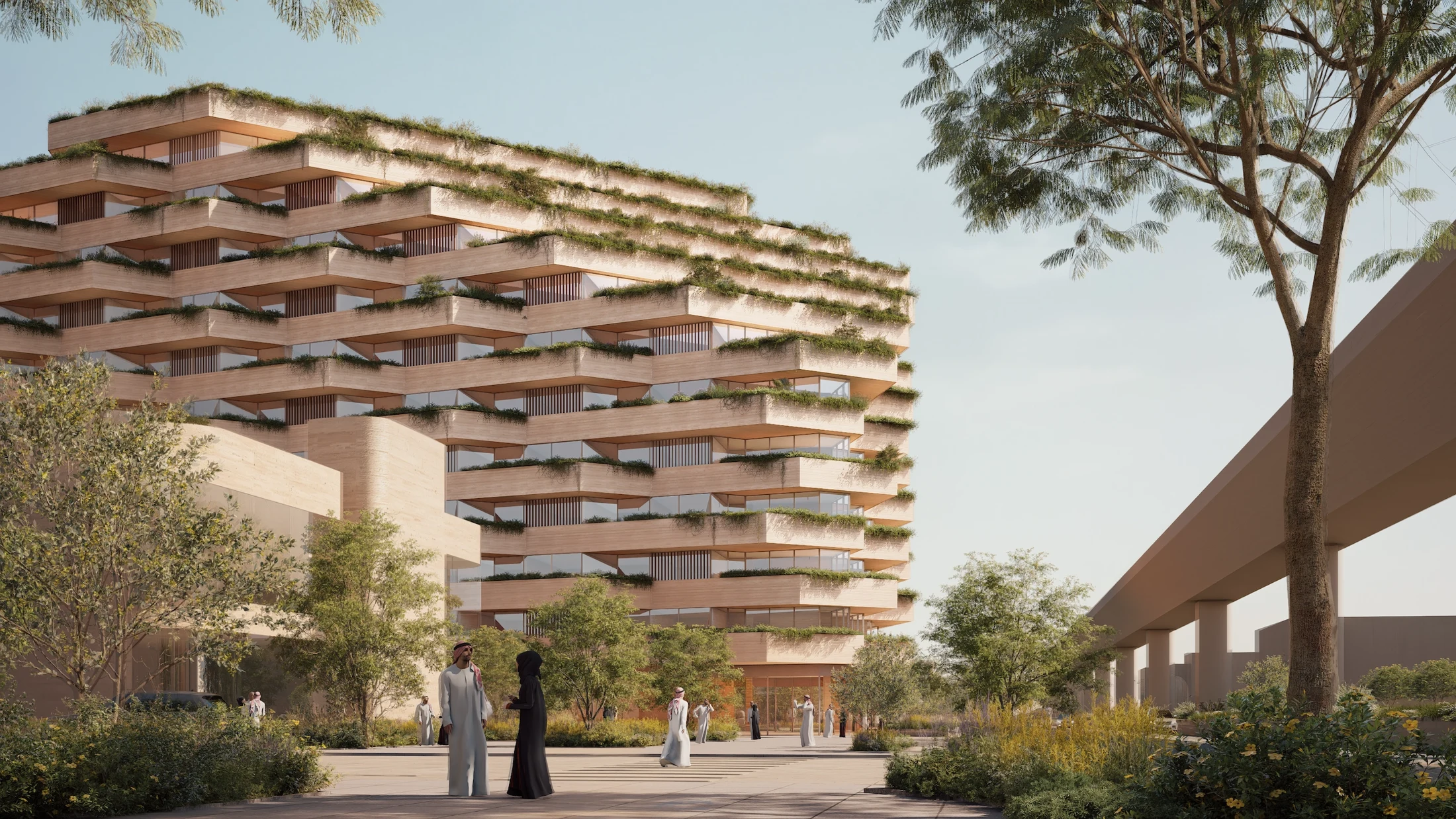 Terraz Residence ↗
Terraz Residence · 2025
Let climate shape the architecture.
At Terraz Residence, stepped terraces, louvers and gardens bring shade, privacy and outdoor life into a dense residential framework. The design explores how a building can behave more like a landscape, with room for daily life between inside and outside.
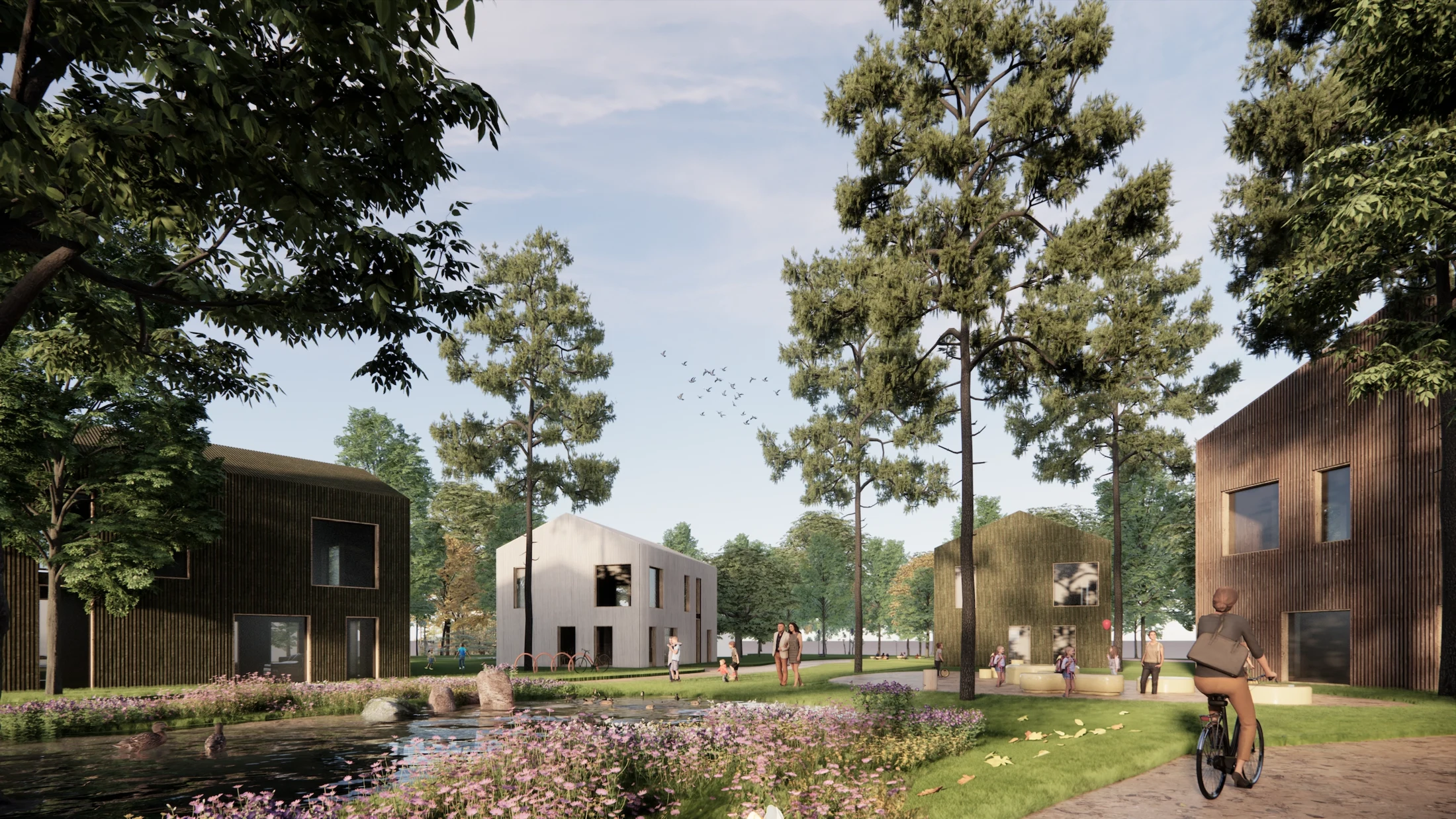 Rethinking Li ↗
Rethinking Li · 2024
Build on the ways a place lives.
Rethinking Li connects the historic centre to the river through civic spaces and a nature corridor. Its proposal brings community life, wooden housing and flood-adaptive landscapes into one framework. Local ways of gathering and living become a starting point for change, rather than something to replace.
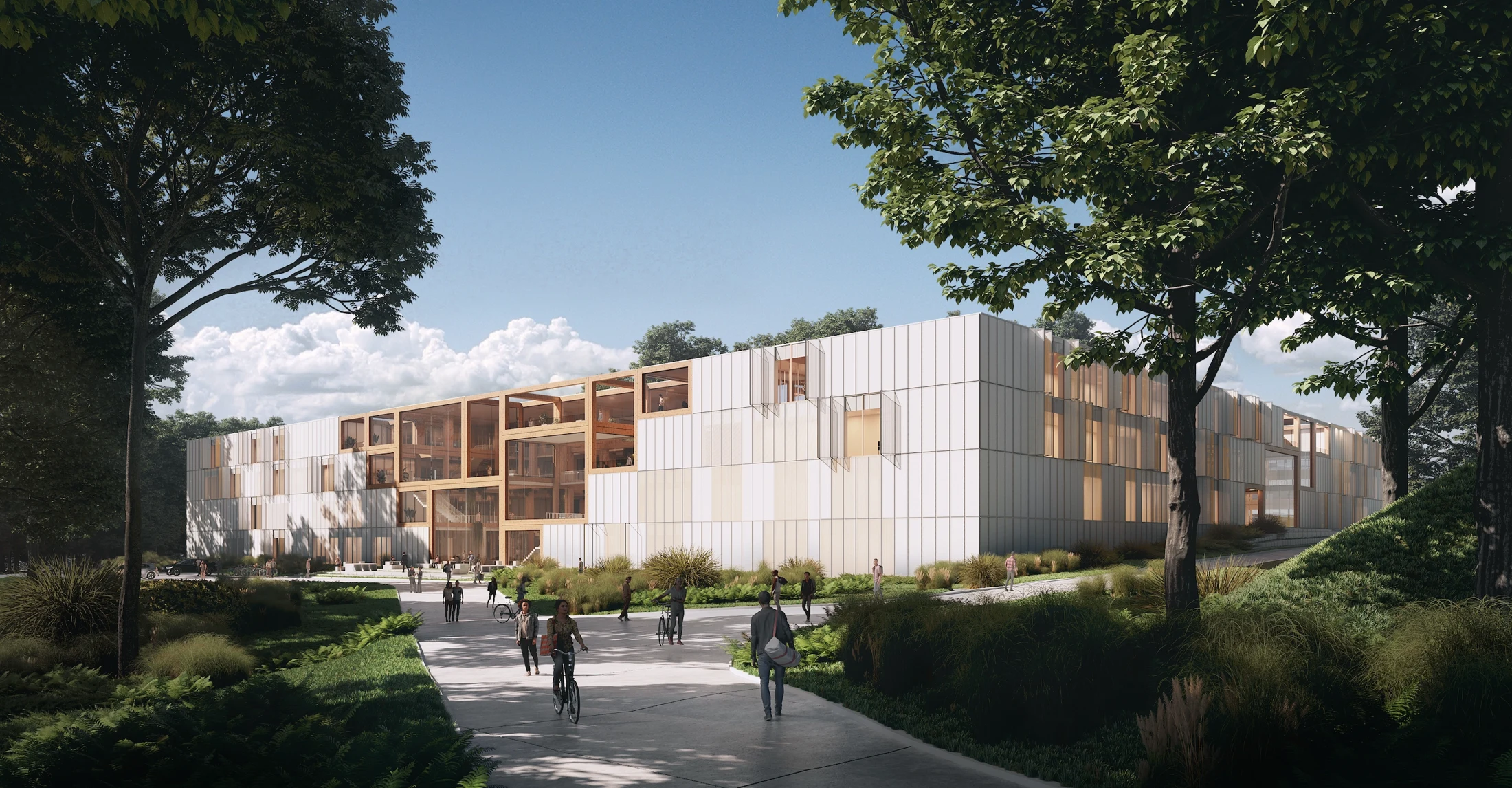 The Study Canyon ↗
The Study Canyon · 2023
Make innovation useful.
The Study Canyon explores a modular timber structure, prefabrication and shared learning spaces. Daylight, ecological landscaping and water retention are considered alongside flexibility and social connection. These are design strategies to investigate and refine, not a substitute for testing environmental performance.
Turn ambition
into evidence.
Sustainability is part of how we think, not a separate discipline. We ask what can be retained, how resources can be used carefully, and how a place can support more life while remaining useful as needs change.
Innovation matters when it improves everyday life. We aim to test material choices, climate response and long-term adaptability with each project team. The projects above illustrate design strategies; environmental outcomes need to be assessed and verified in their own context.
Explore projects ↗