What if a building’s unused vertical surfaces could become places for nature to inhabit? NEST, ENTROPIC’s modular façade research, explores how architecture can make room for biodiversity within the city.
NEST at the EU Pavilion
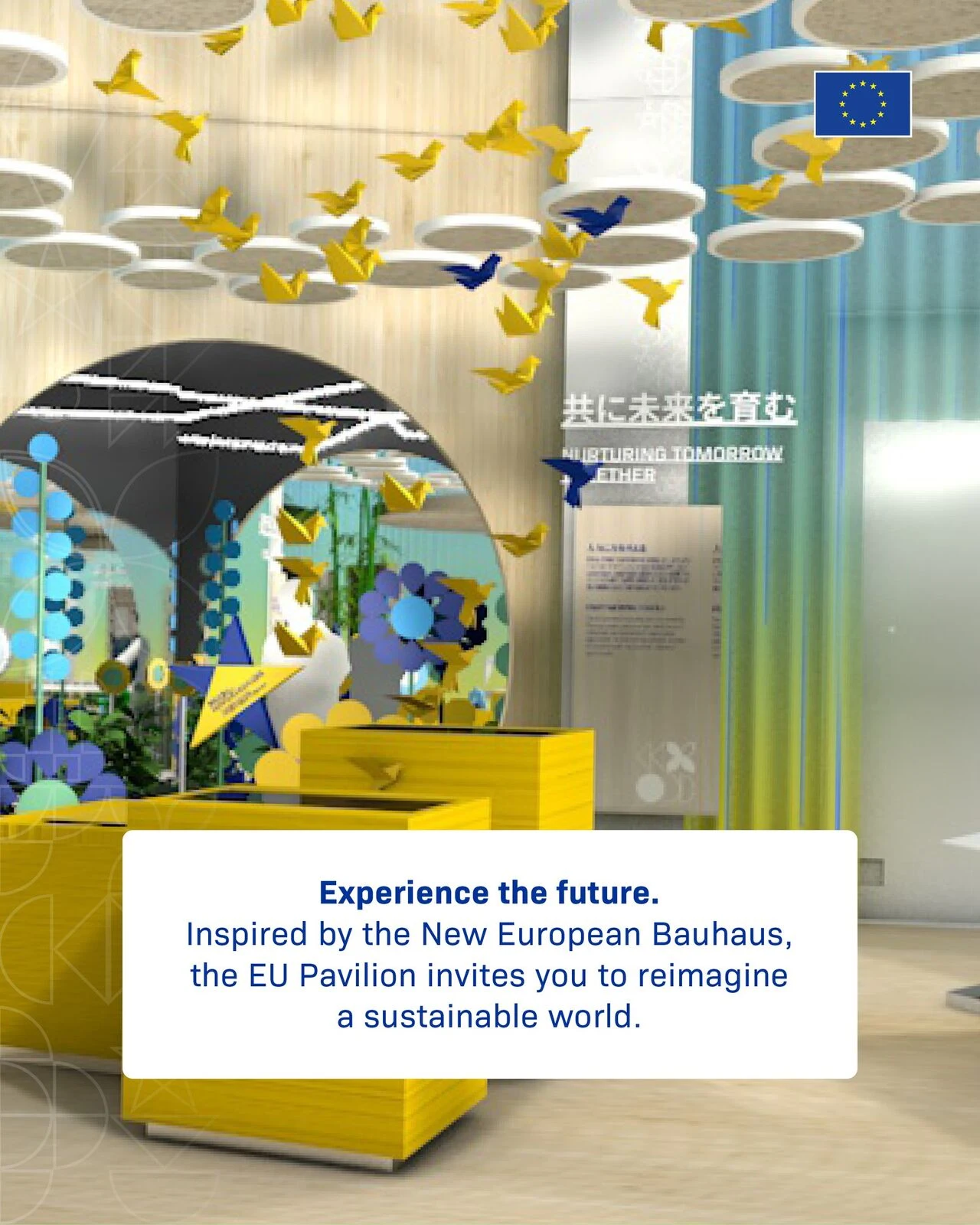
Announced by ENTROPIC on 24 April 2025, NEST’s selection for the New European Bauhaus digital exhibition at the EU Pavilion at Expo Osaka 2025 brings this investigation into an international conversation about sustainable, beautiful and inclusive environments. EIT’s official report identifies NEST, Biosphere Solar and ToGather Homes as the three ventures selected by the Joint Research Centre to present New European Bauhaus innovation at Osaka.
A façade for shared urban habitats
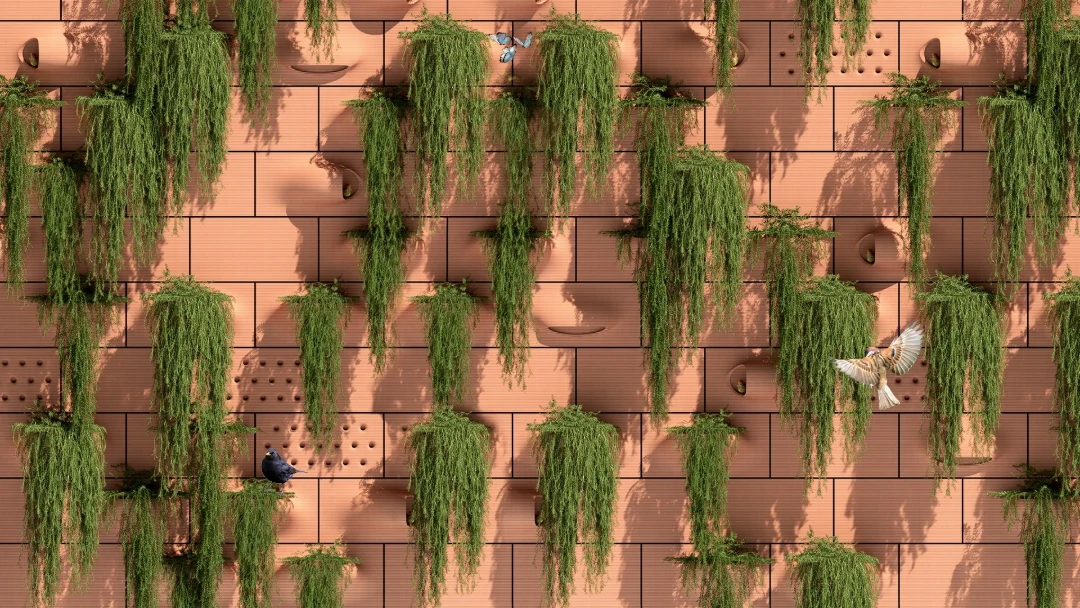
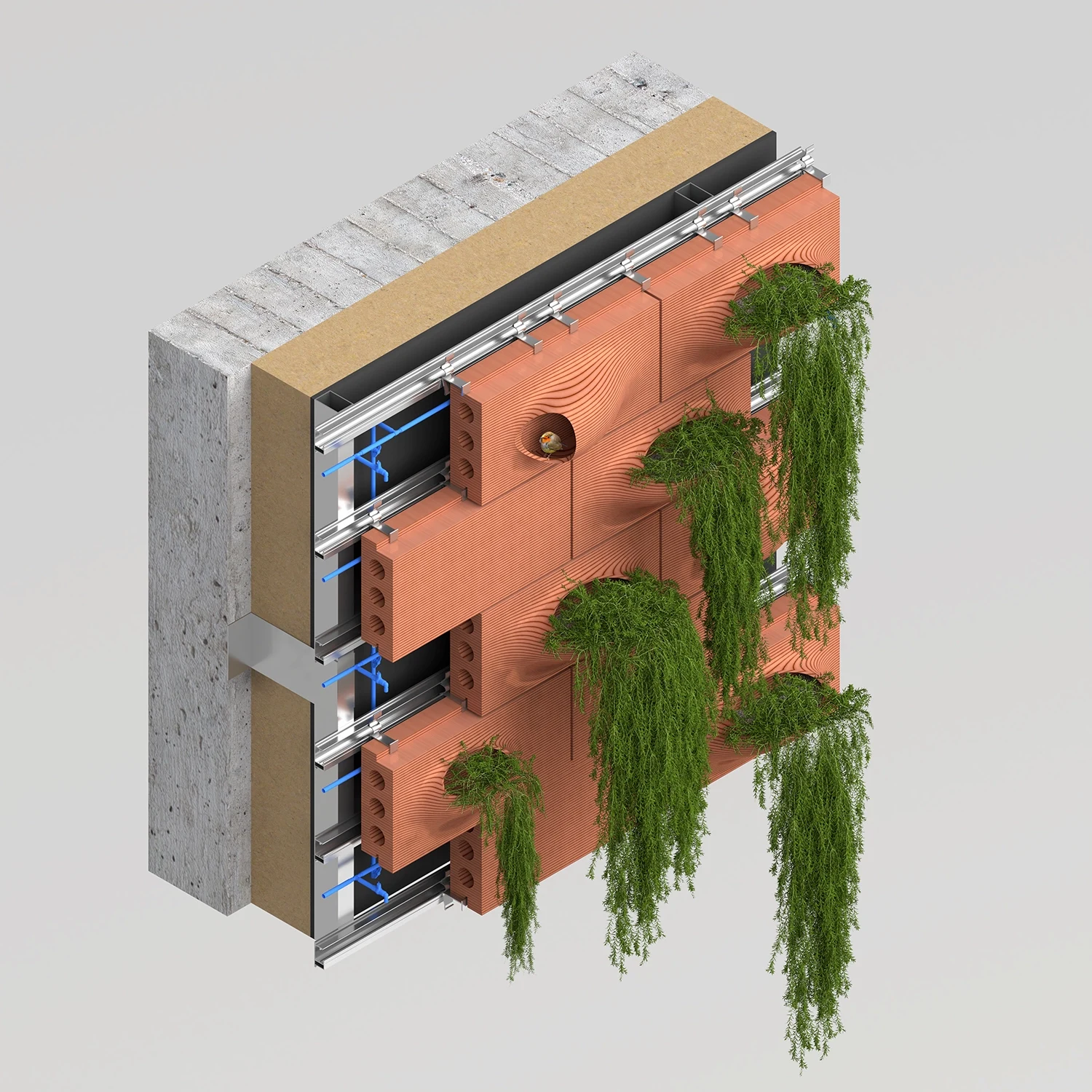
The research reconsiders the building envelope as an interface between architecture and ecology. Ceramic and clay components offer nesting cavities, pollinator niches and pockets for vegetation, with different module forms conceived as microhabitats rather than decoration. Their modular configuration investigates opportunities for both new construction and existing buildings.
Developed by Magdalena Mróz and Geoffrey Eberle, NEST moves between the scale of a fabricated component and the wider urban landscape. Its ambition is not simply to place greenery beside architecture, but to ask how buildings themselves could participate in a living urban environment. The Osaka selection offers a platform to share that proposition, connecting material research with the everyday fabric of the city.
We thank the European Institute of Innovation and Technology, the EIT Community New European Bauhaus and the Joint Research Centre for supporting and sharing this vision.
Explore the NEST façade study · Read the original LinkedIn announcement