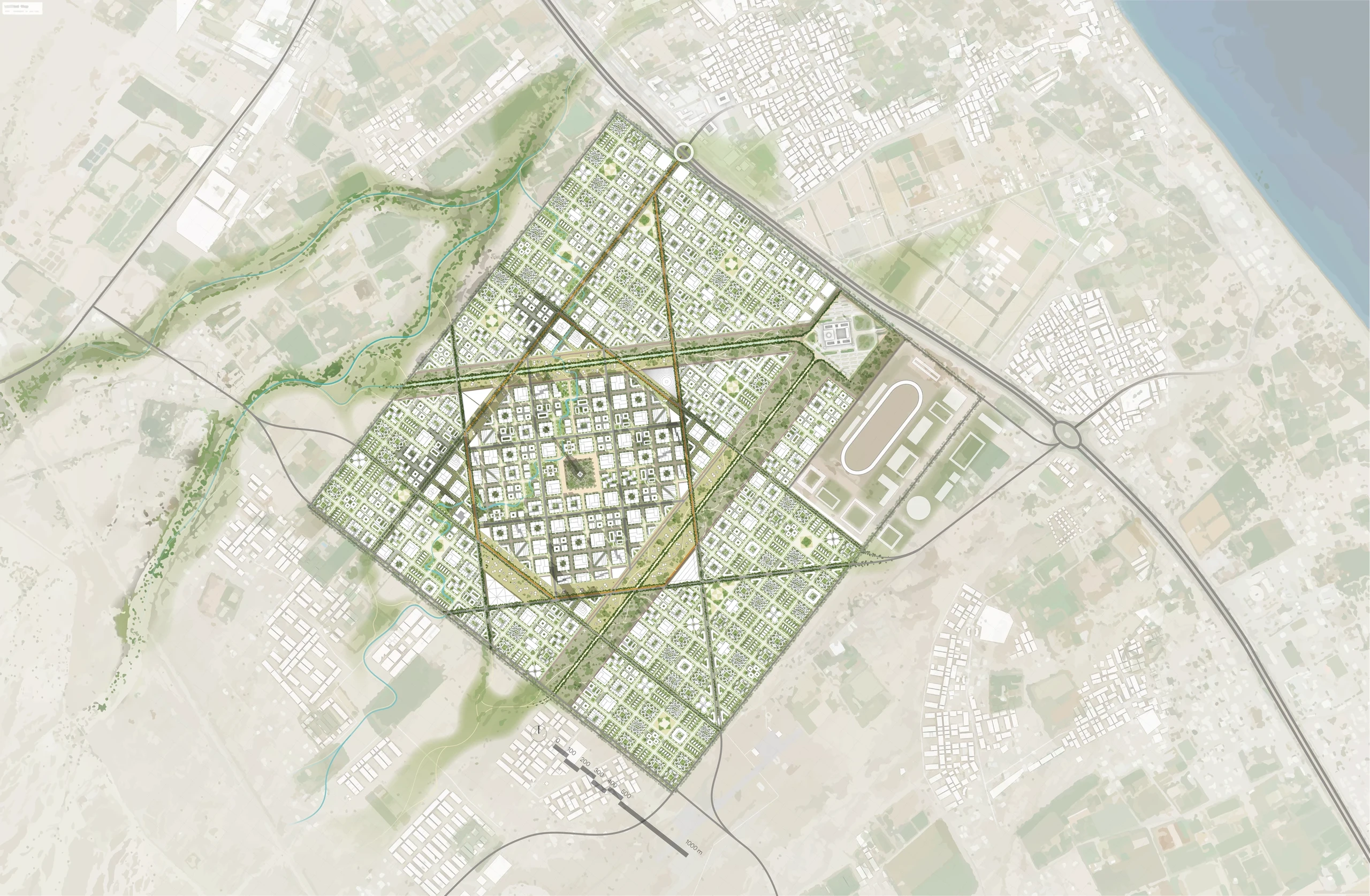
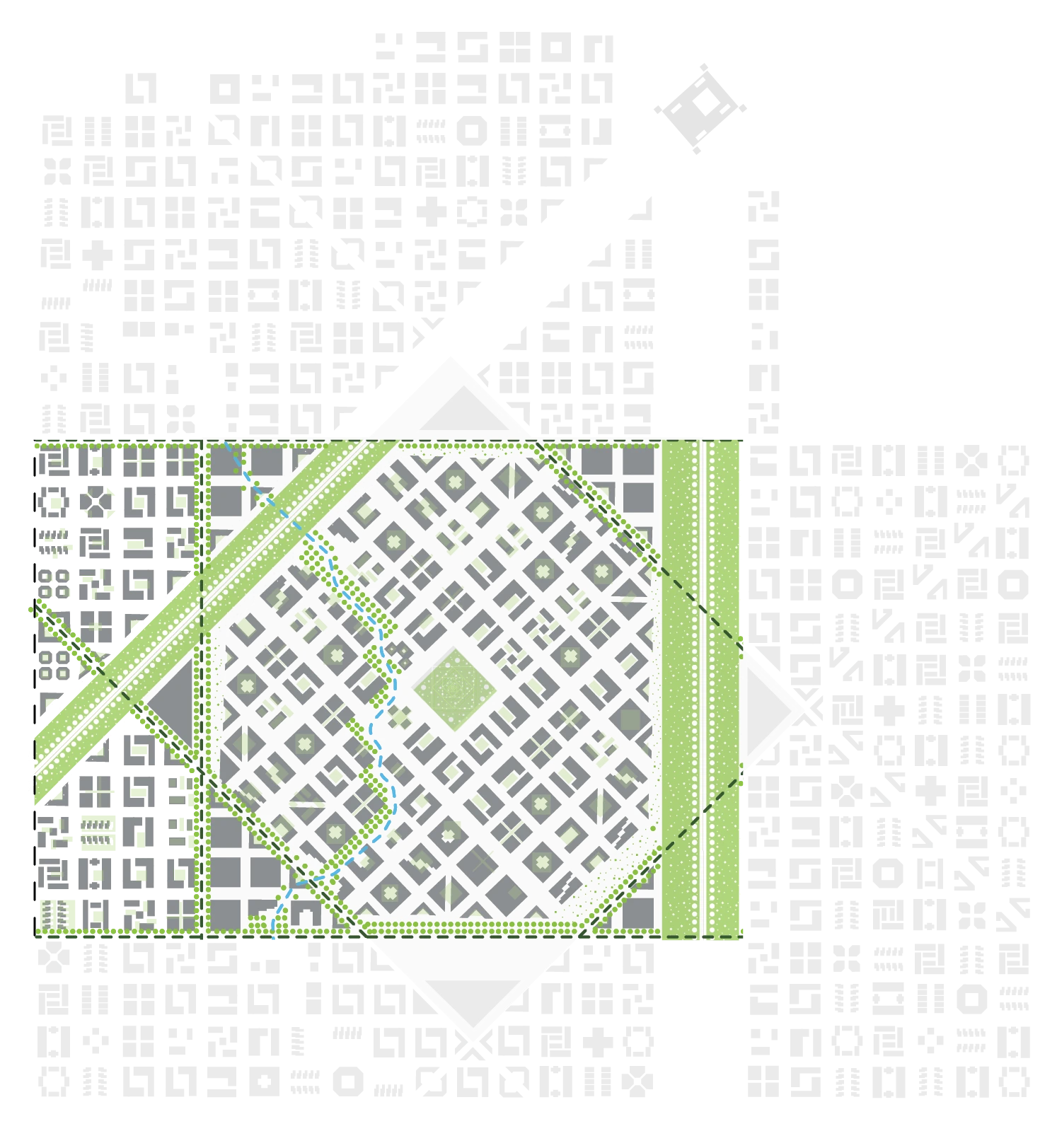
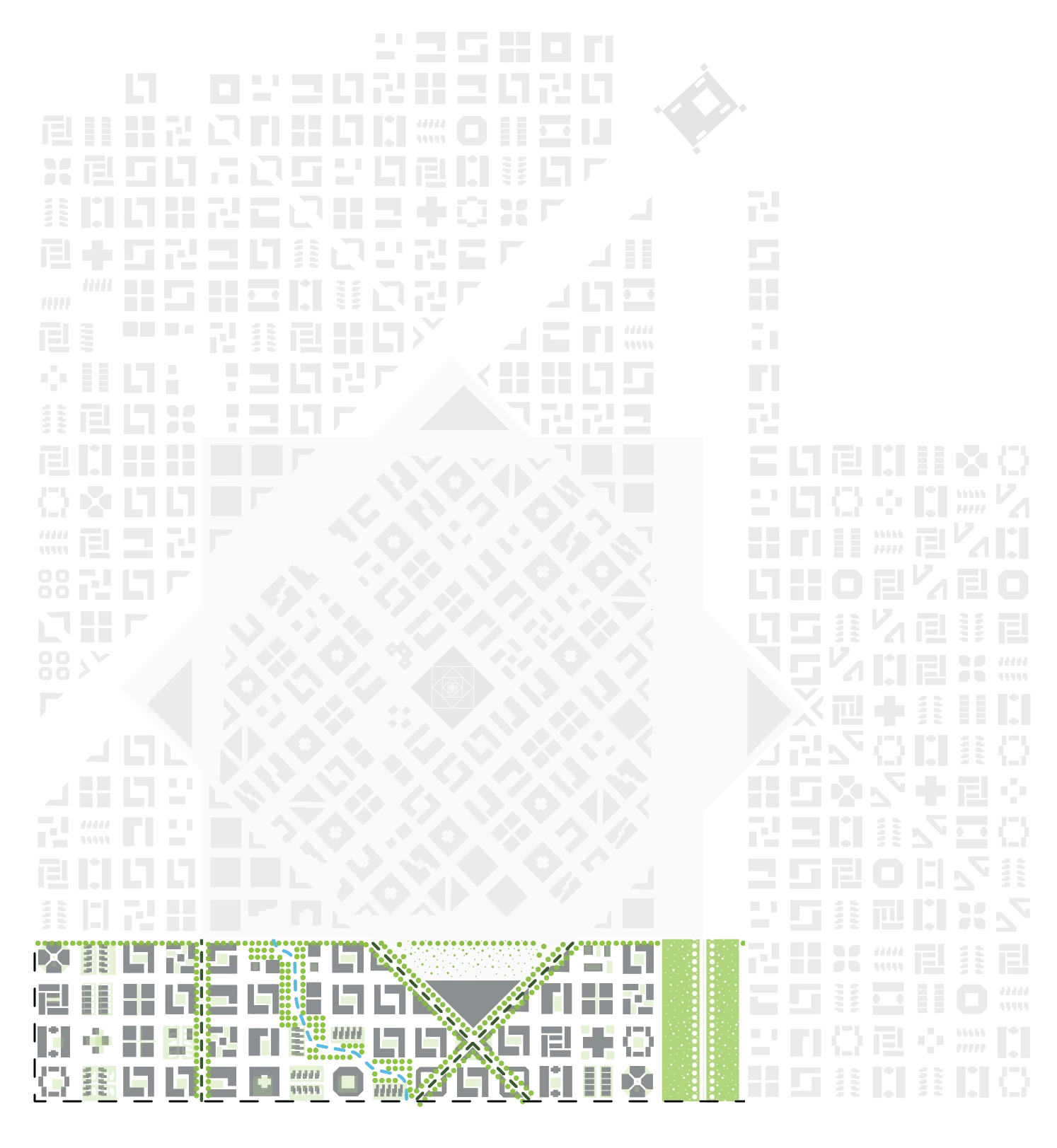
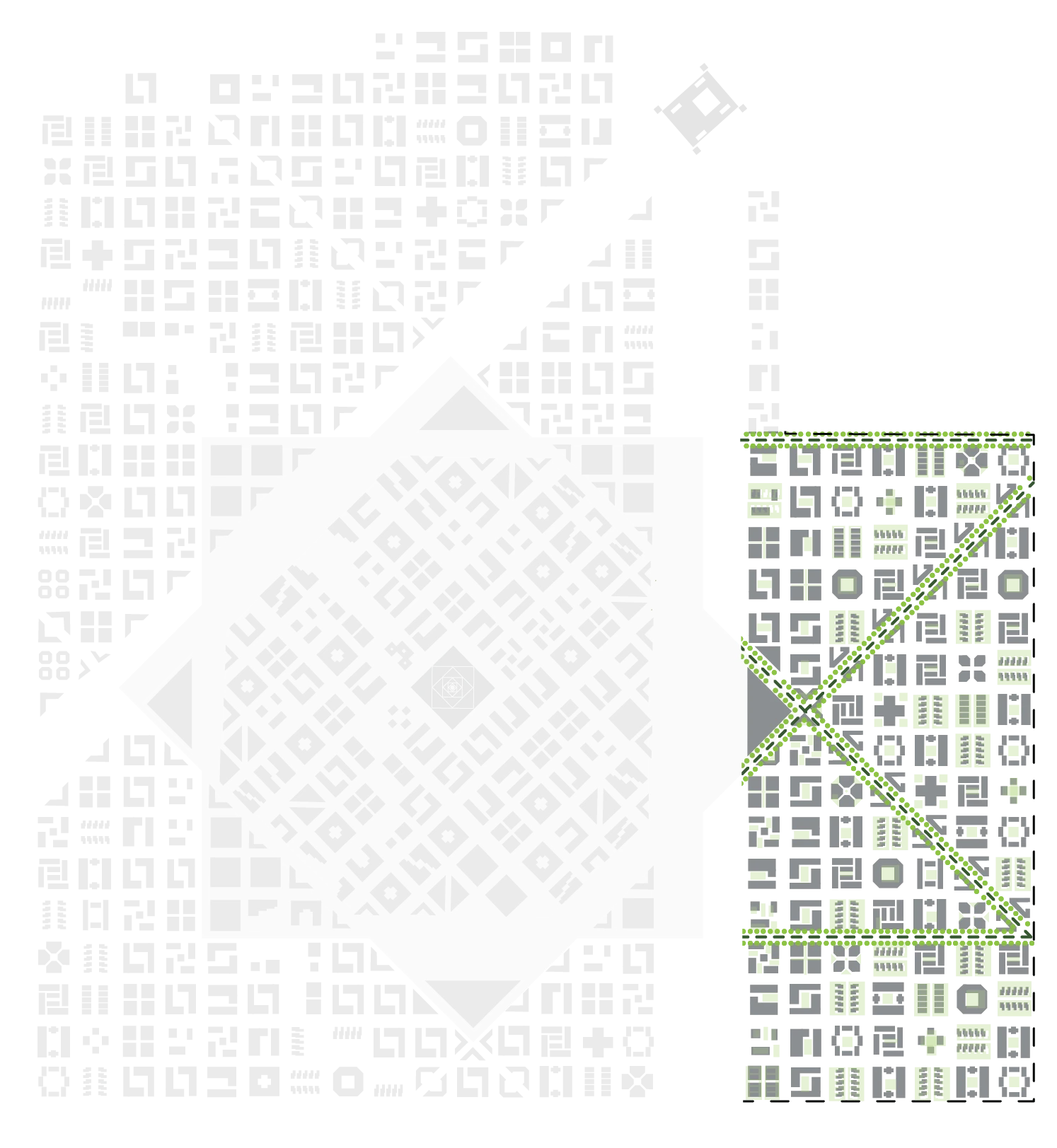
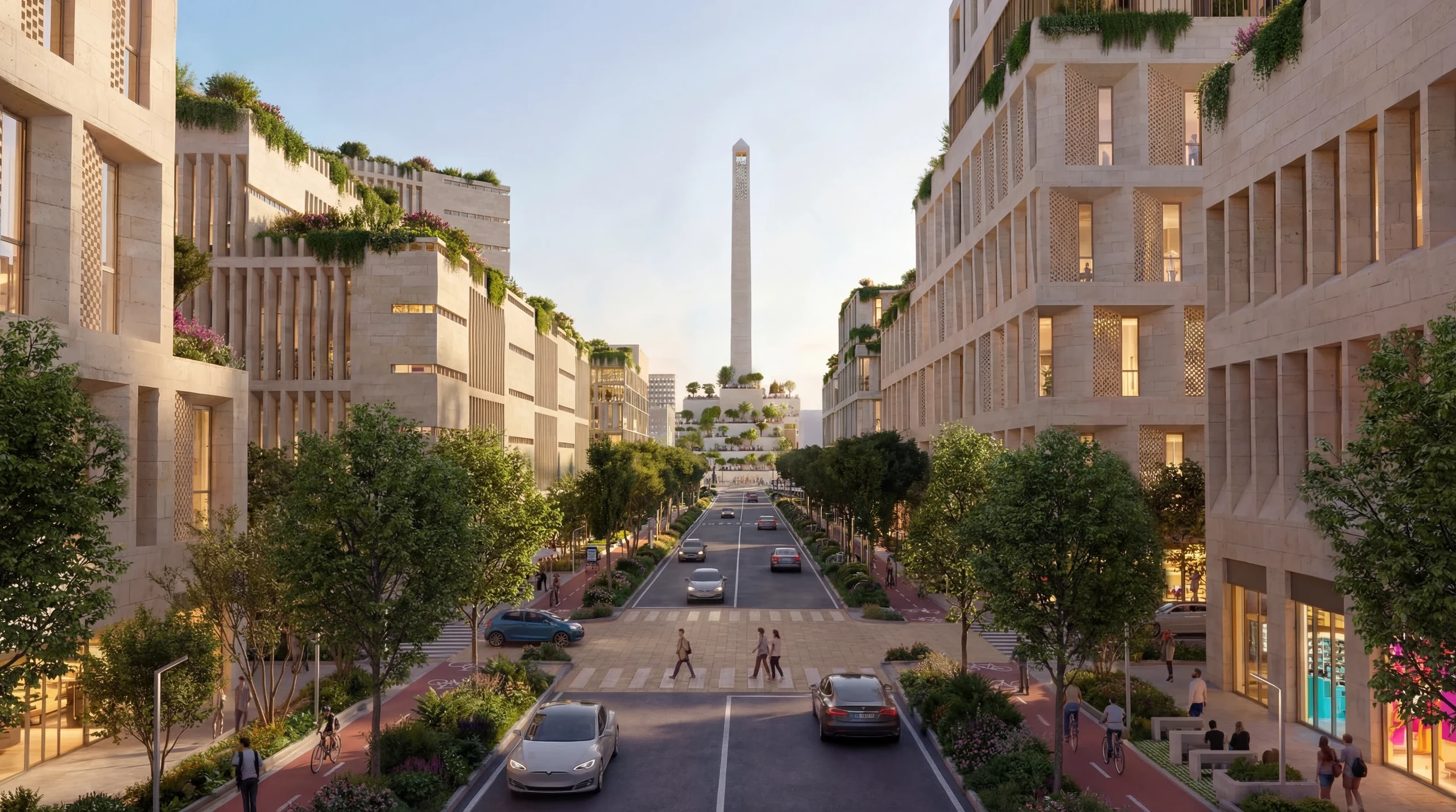
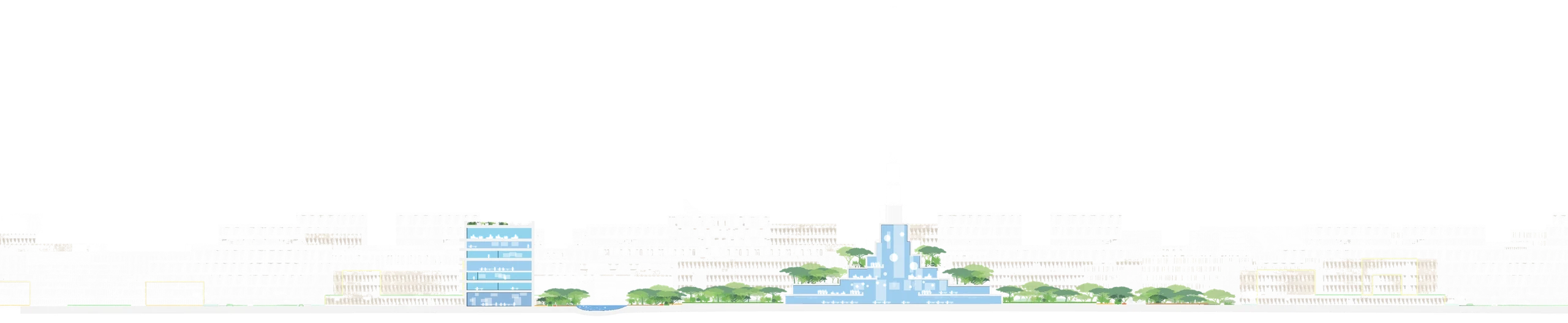
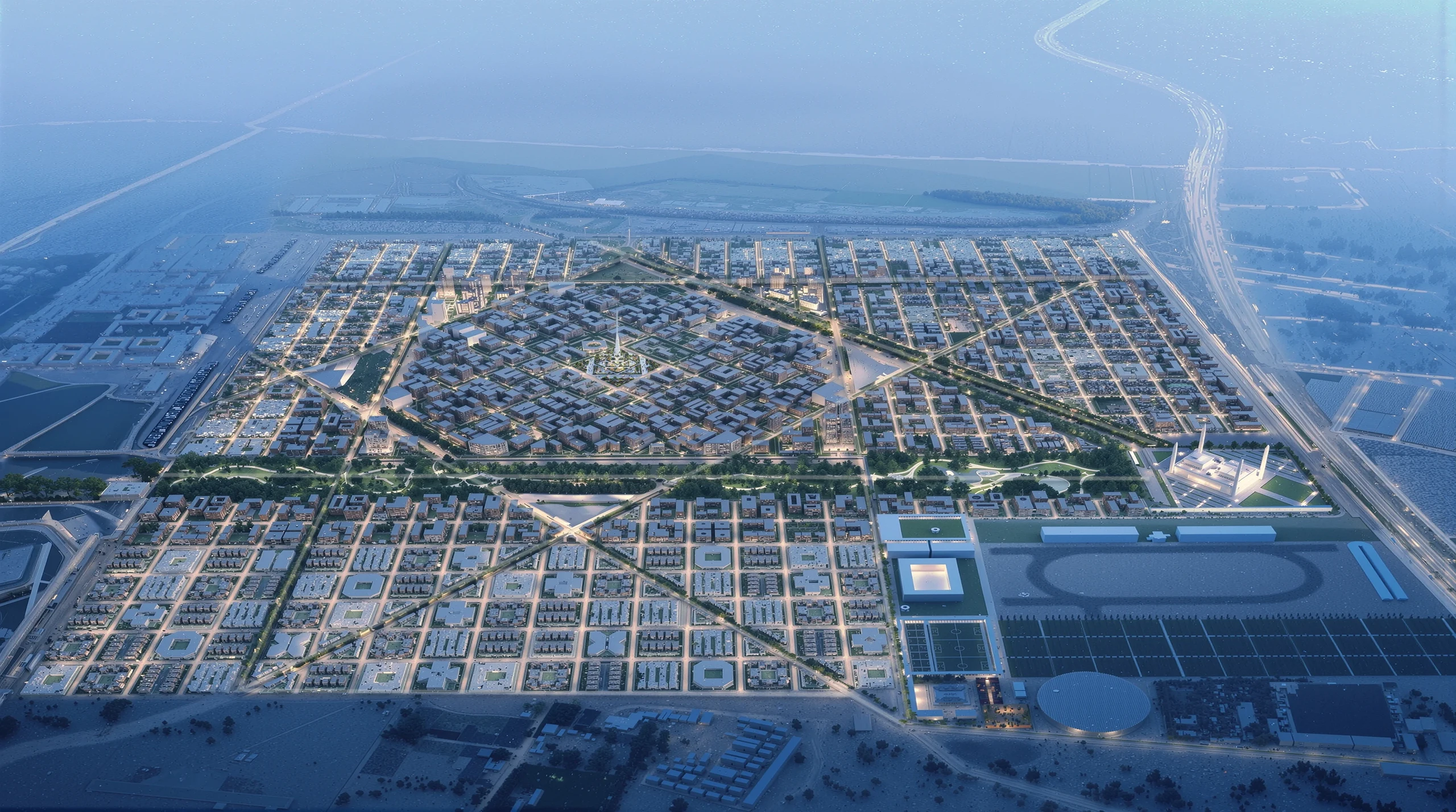
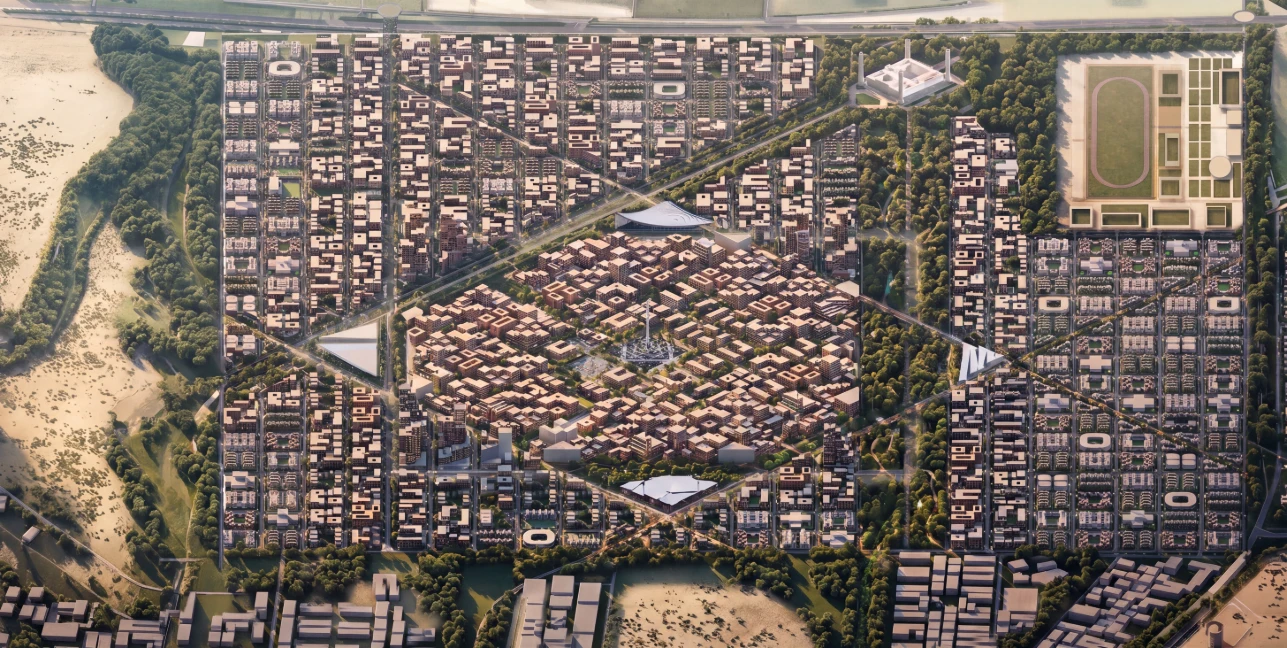
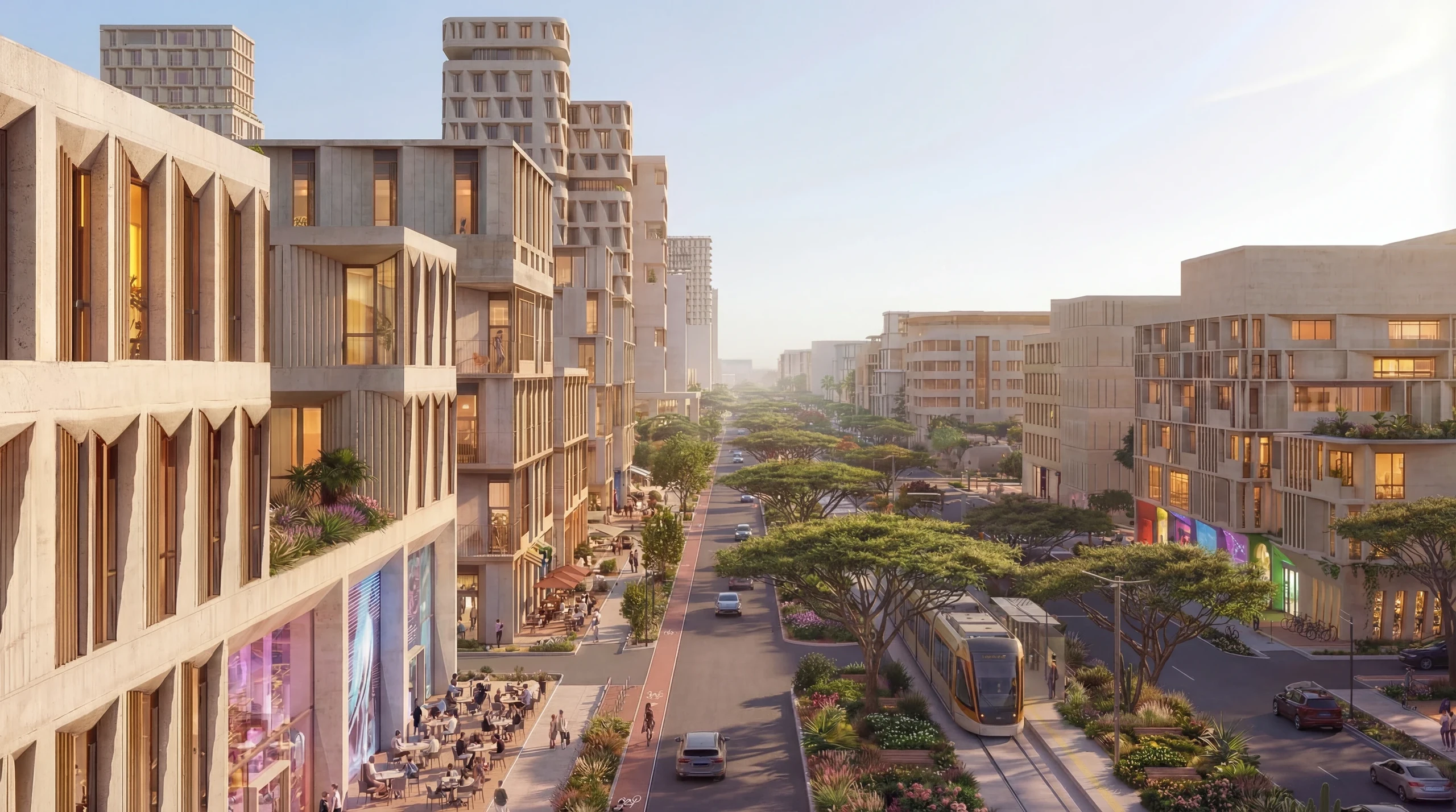
Mixed-use edges support a connected public realm
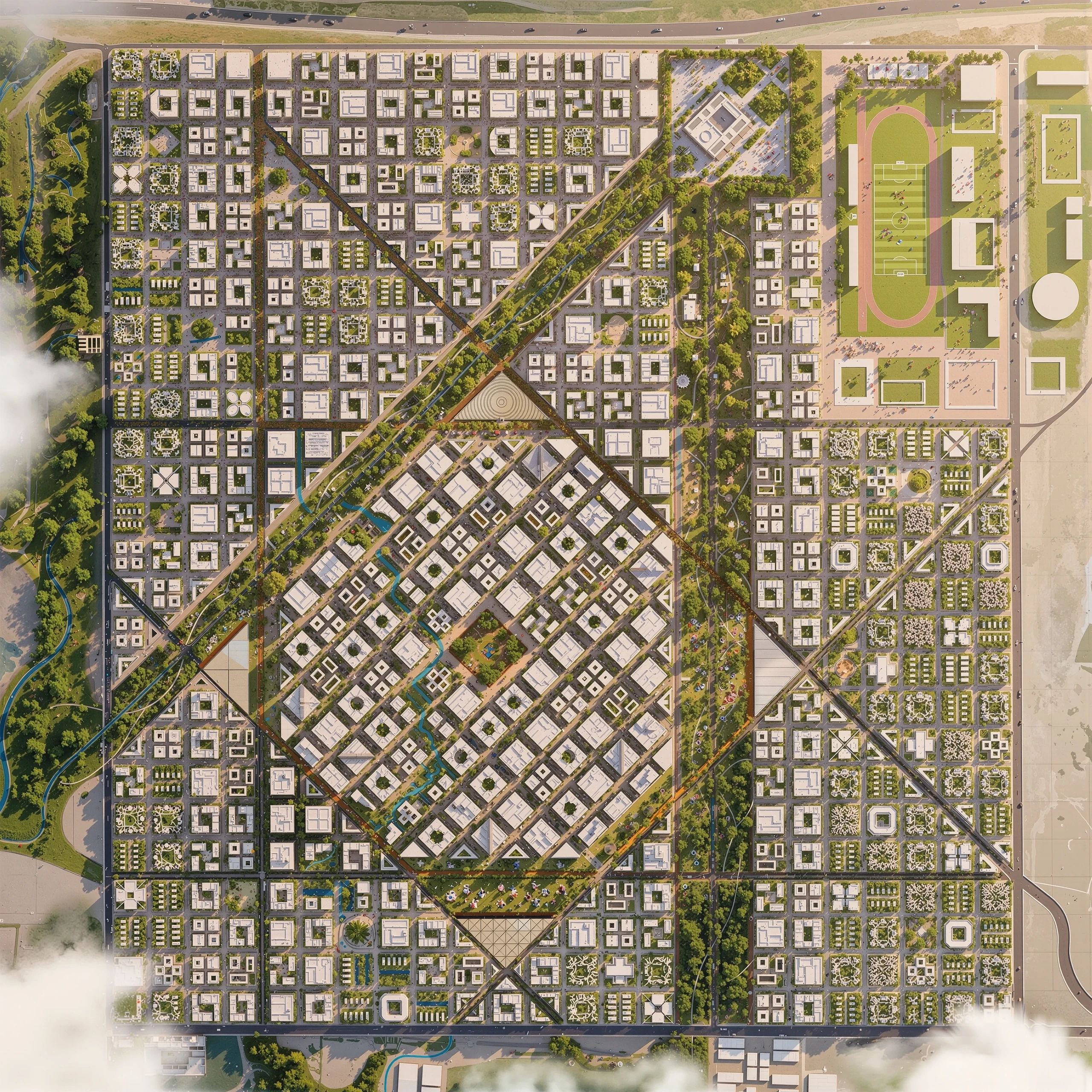
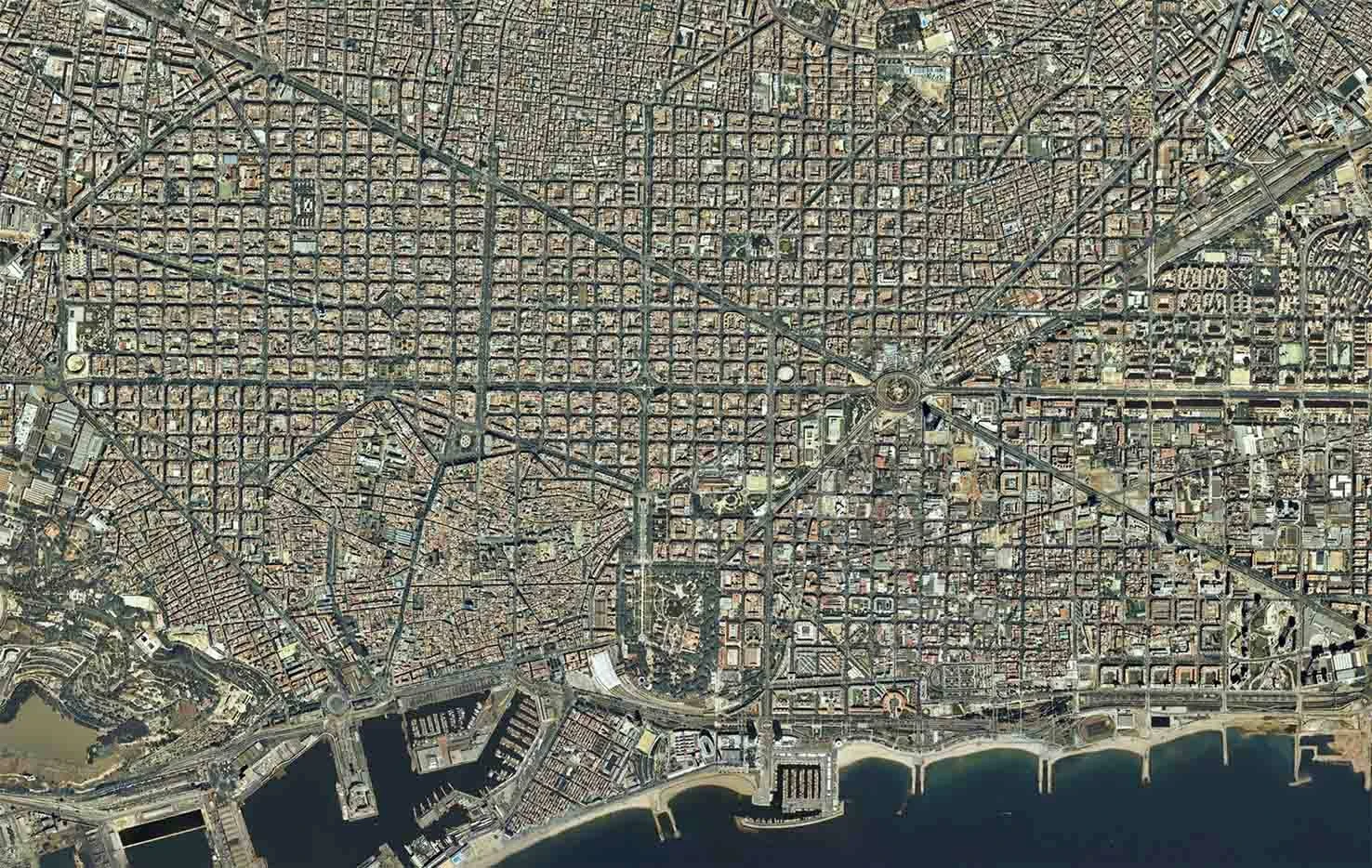
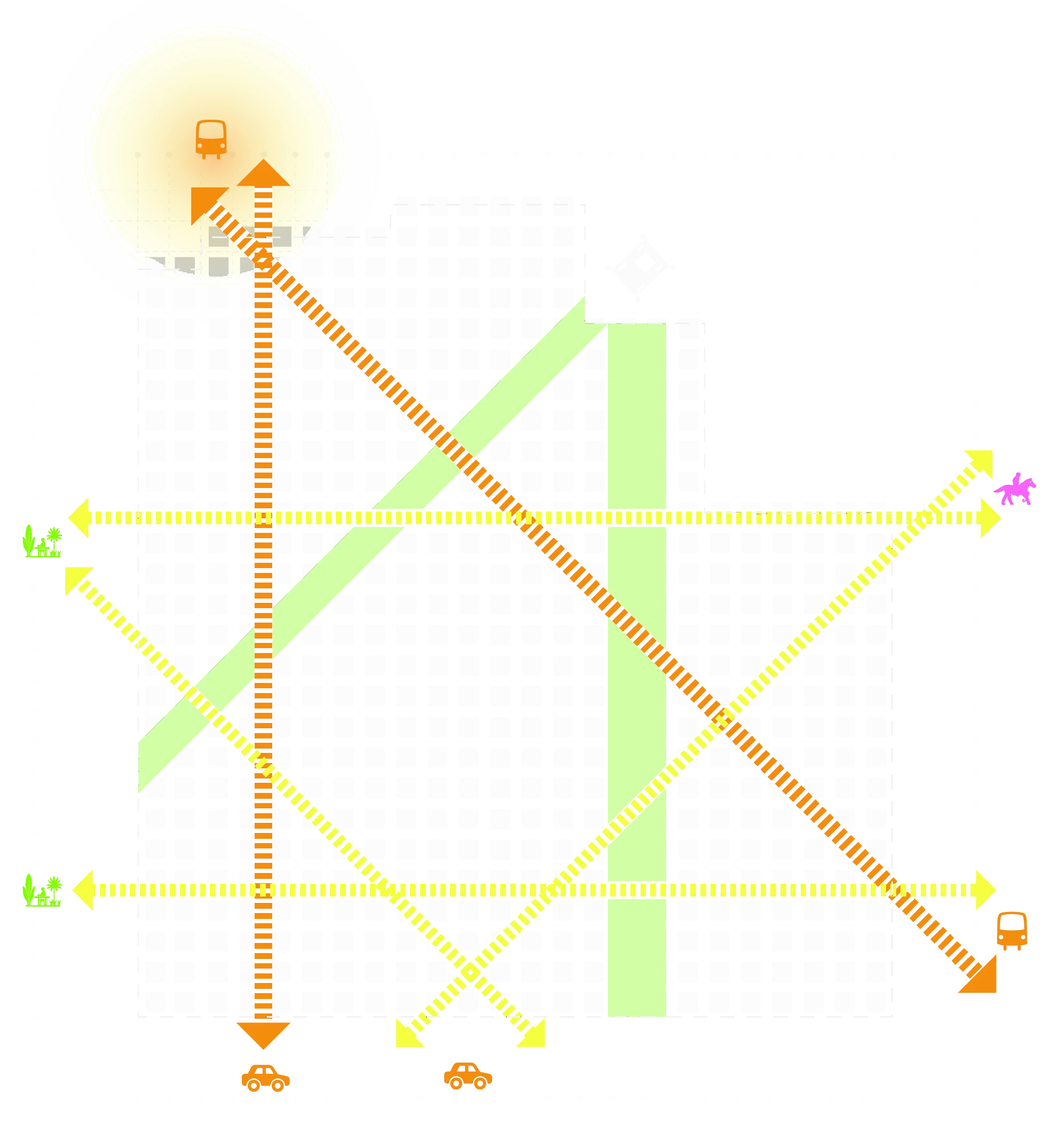
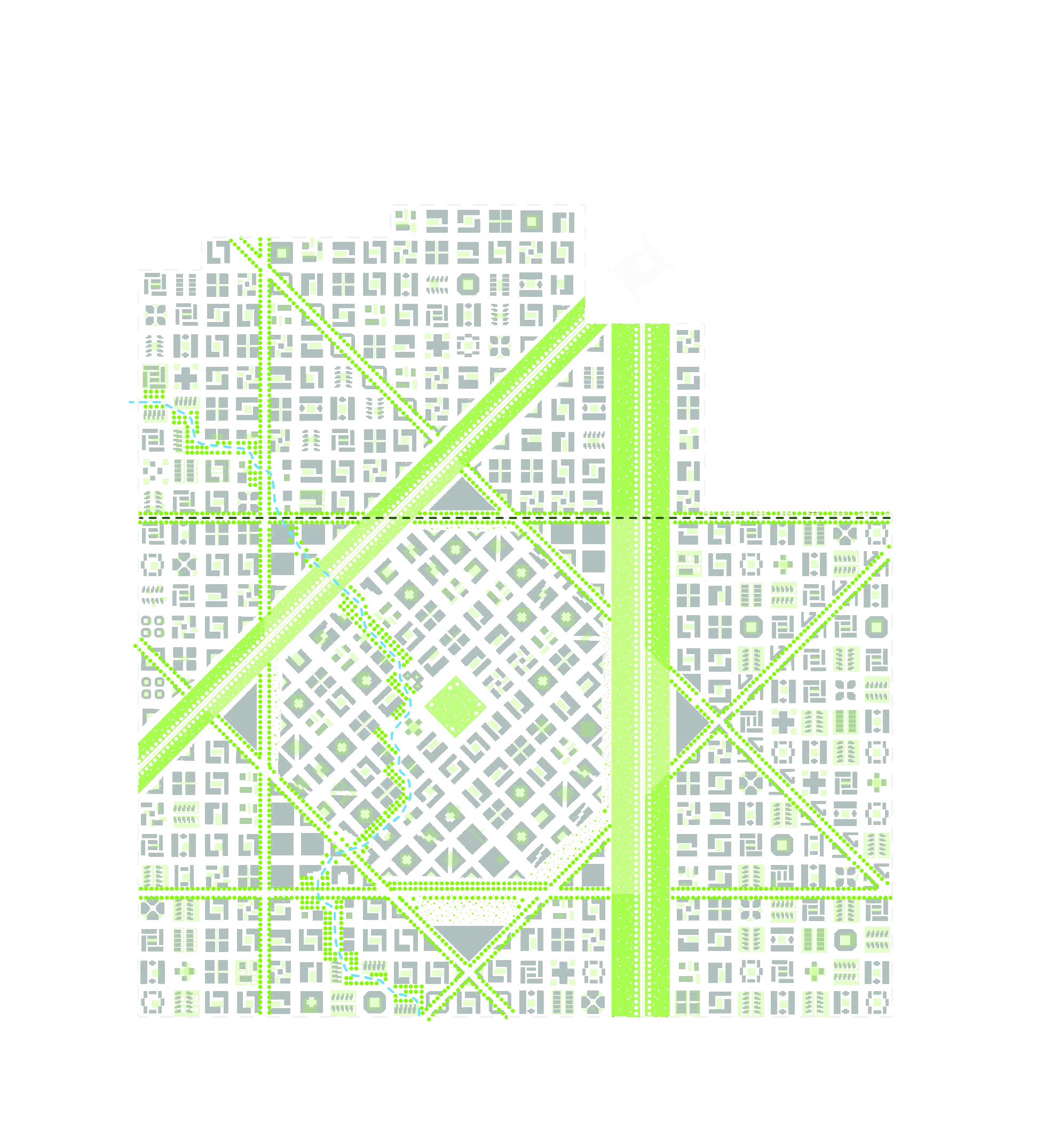
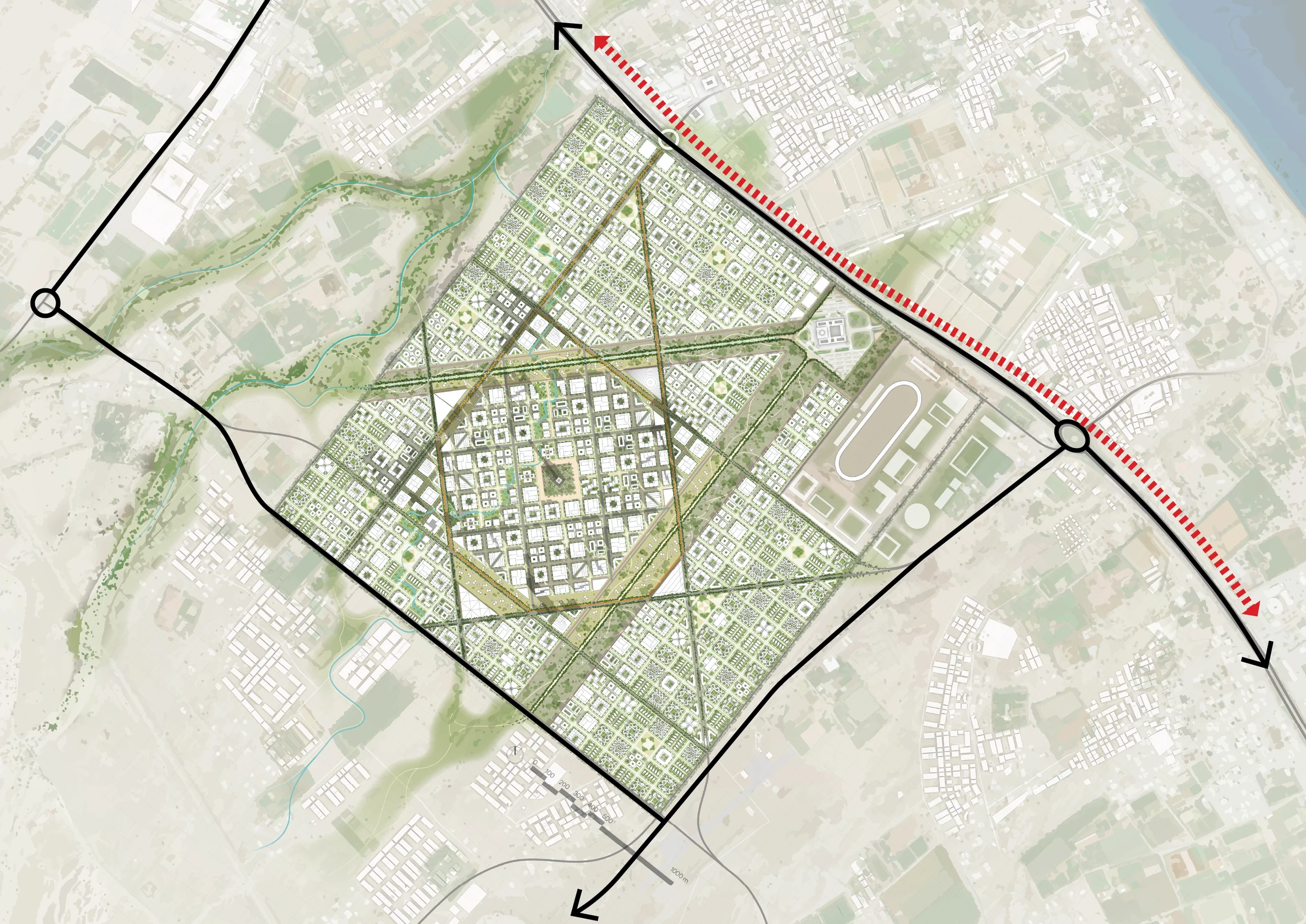
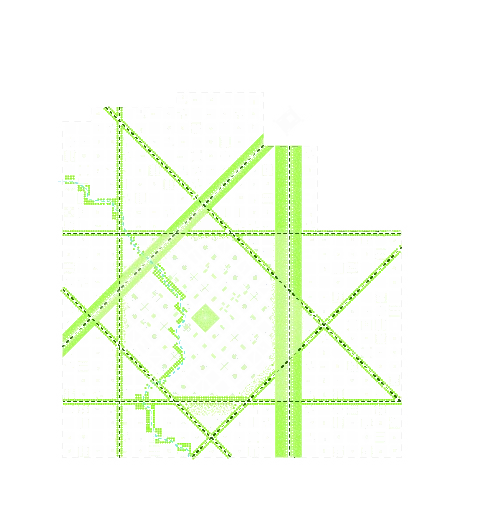
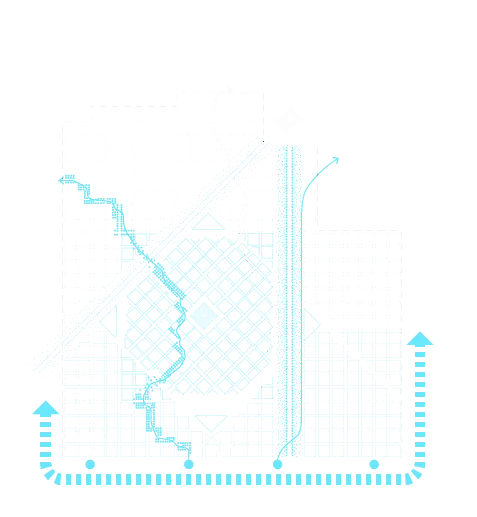
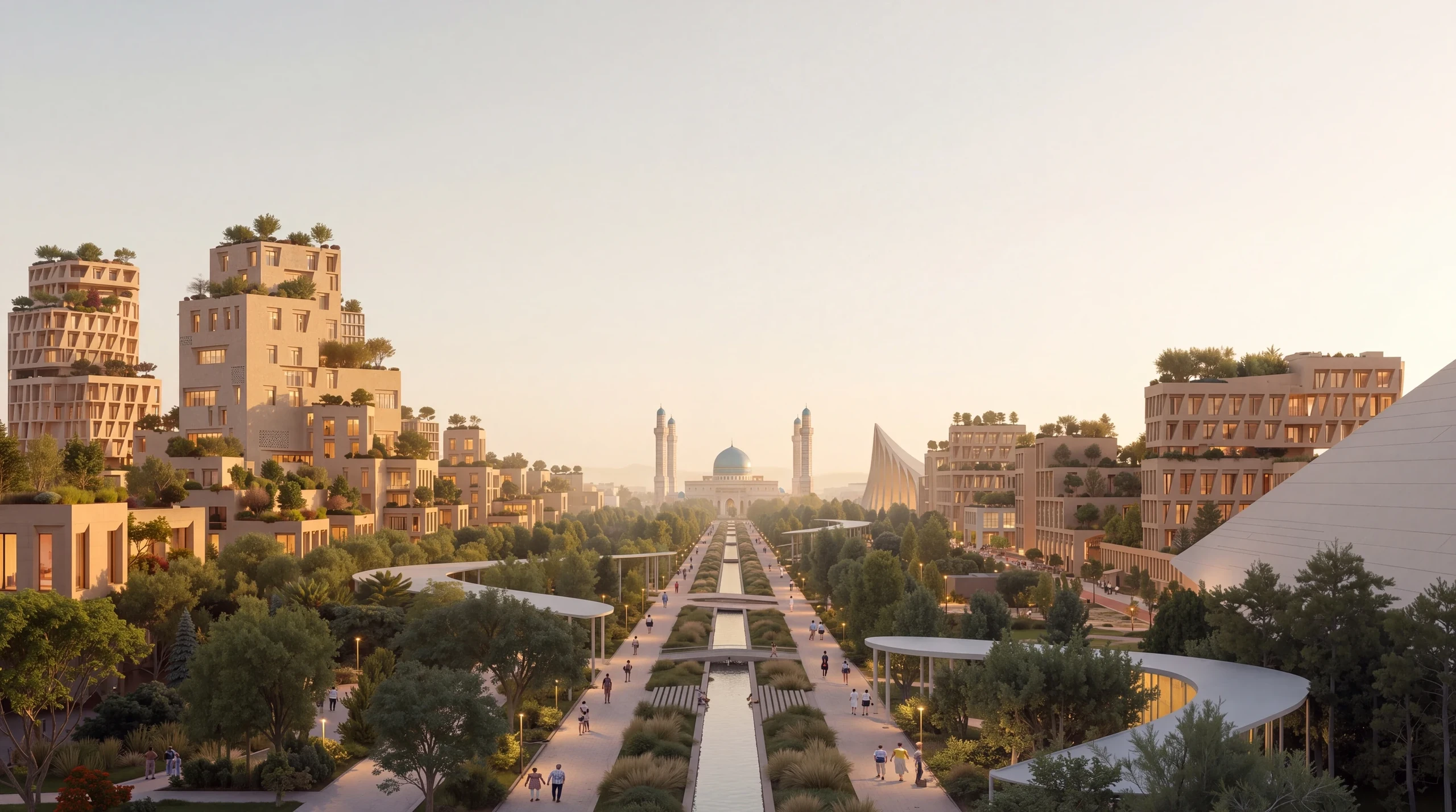
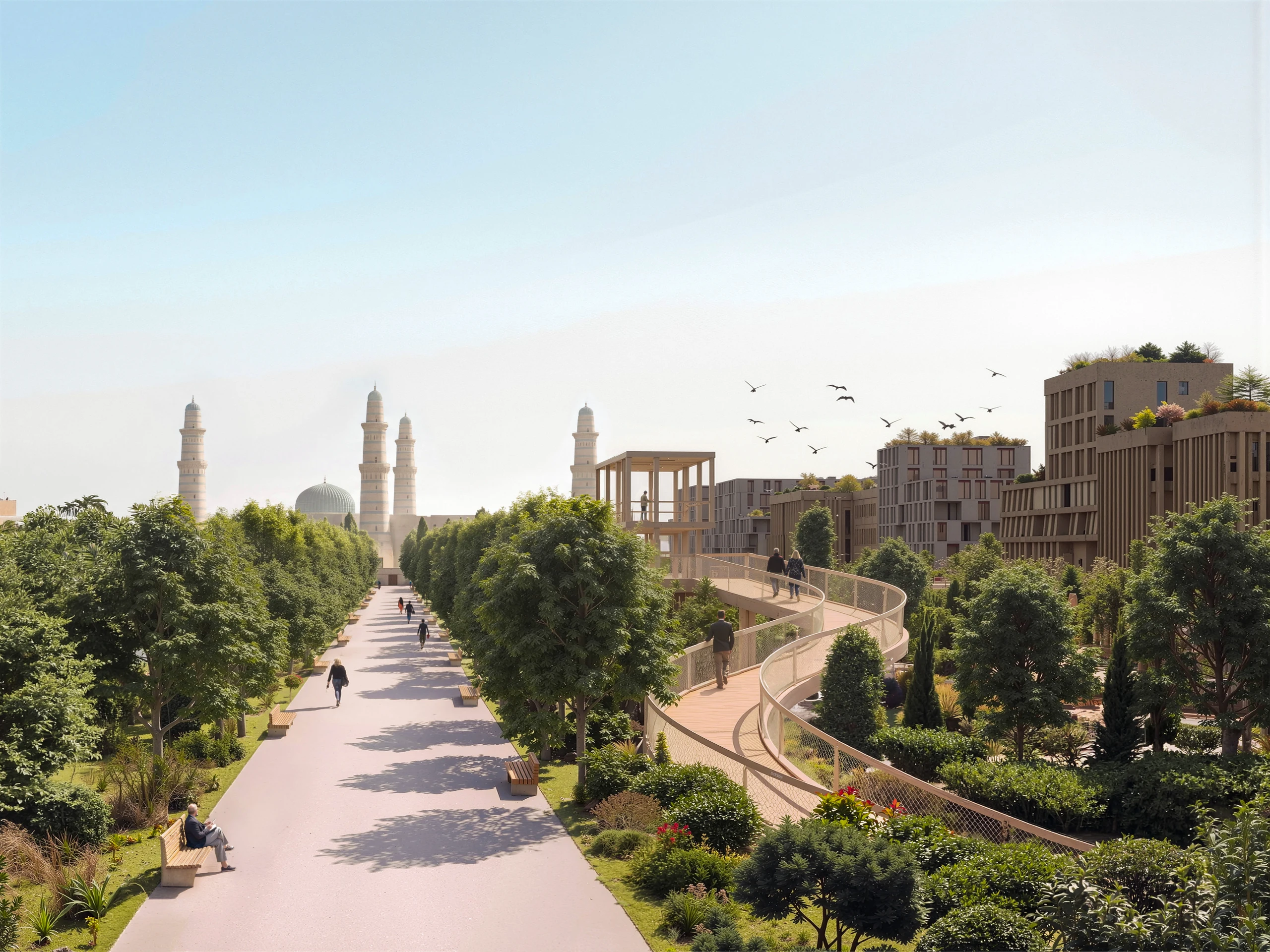
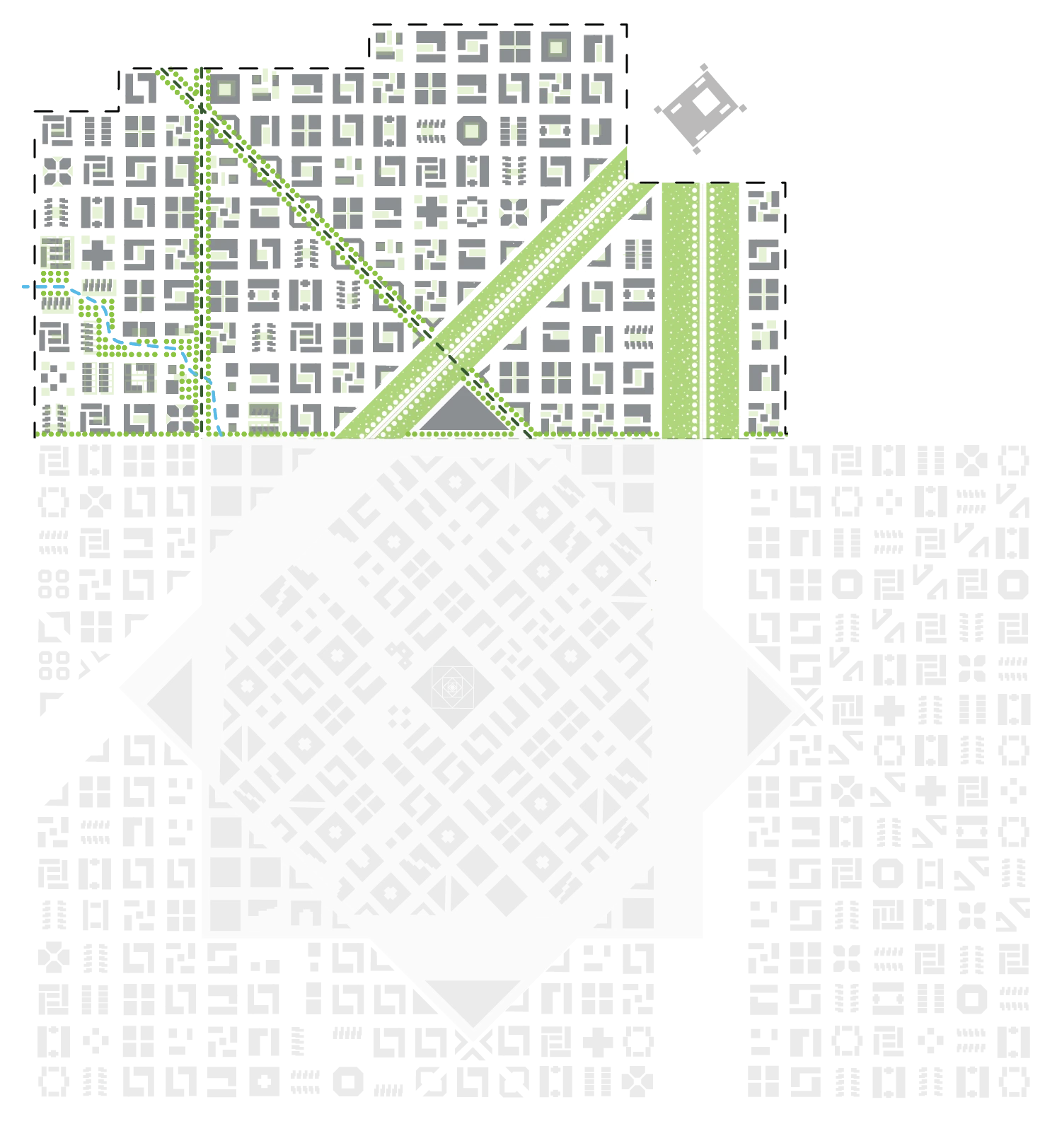
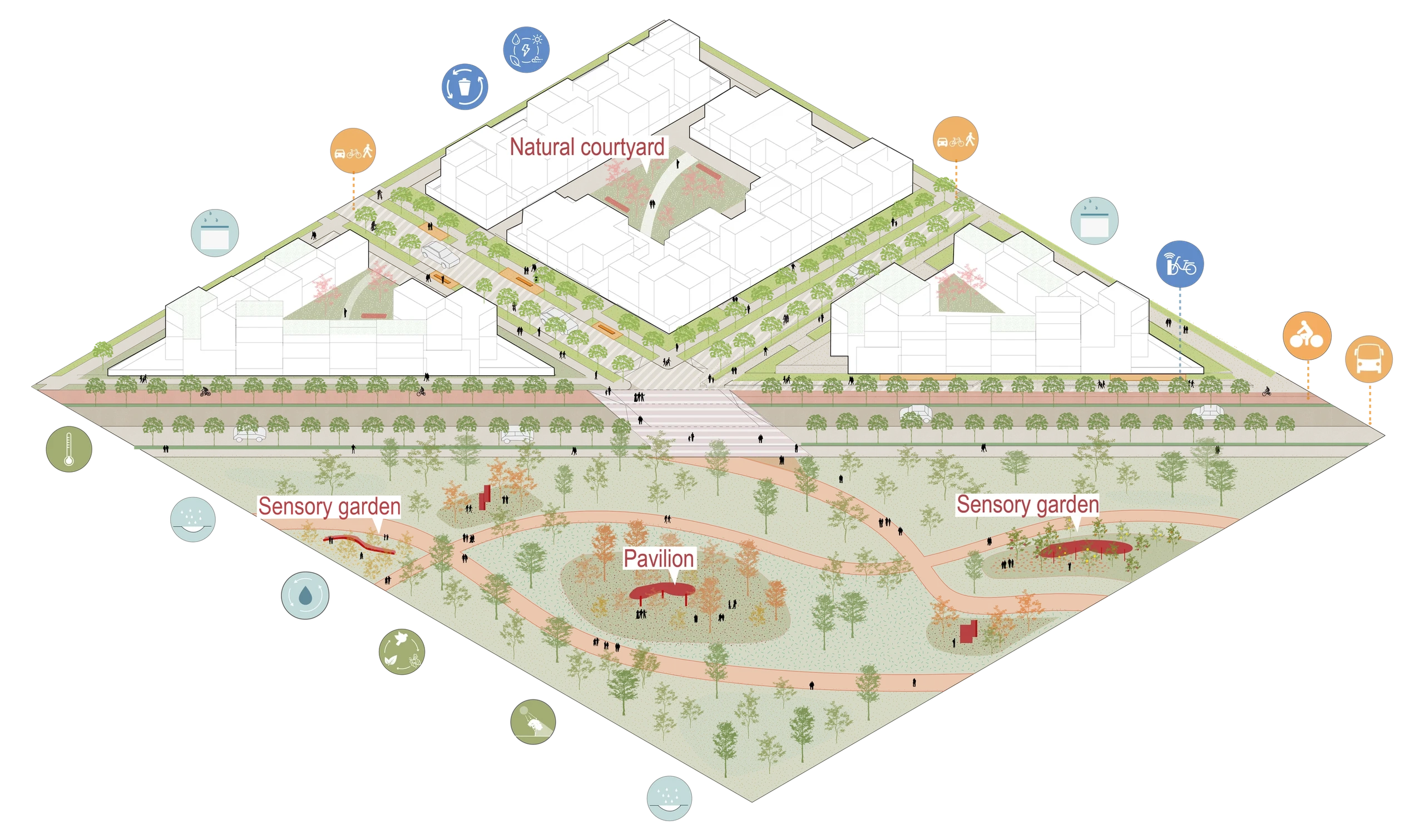
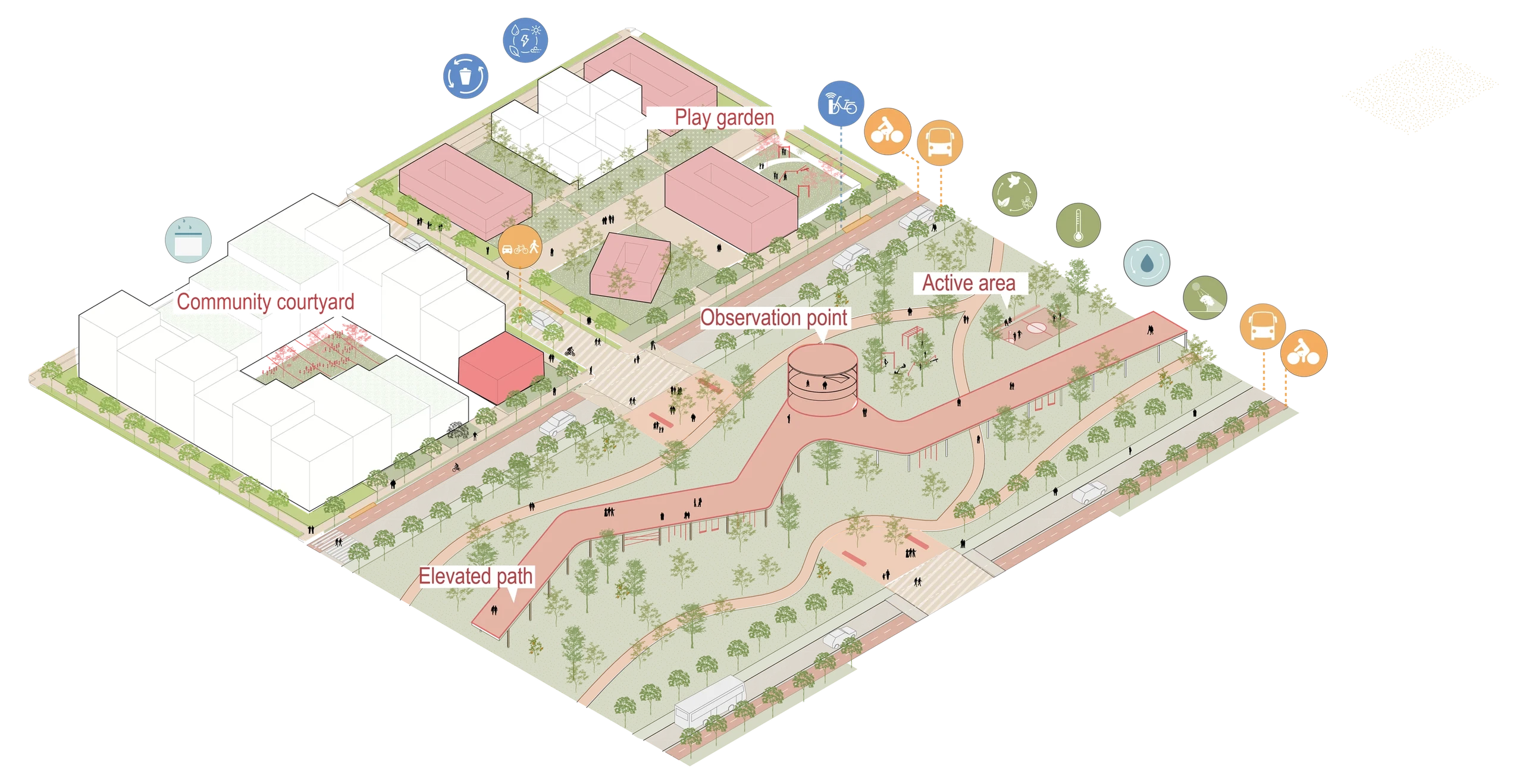
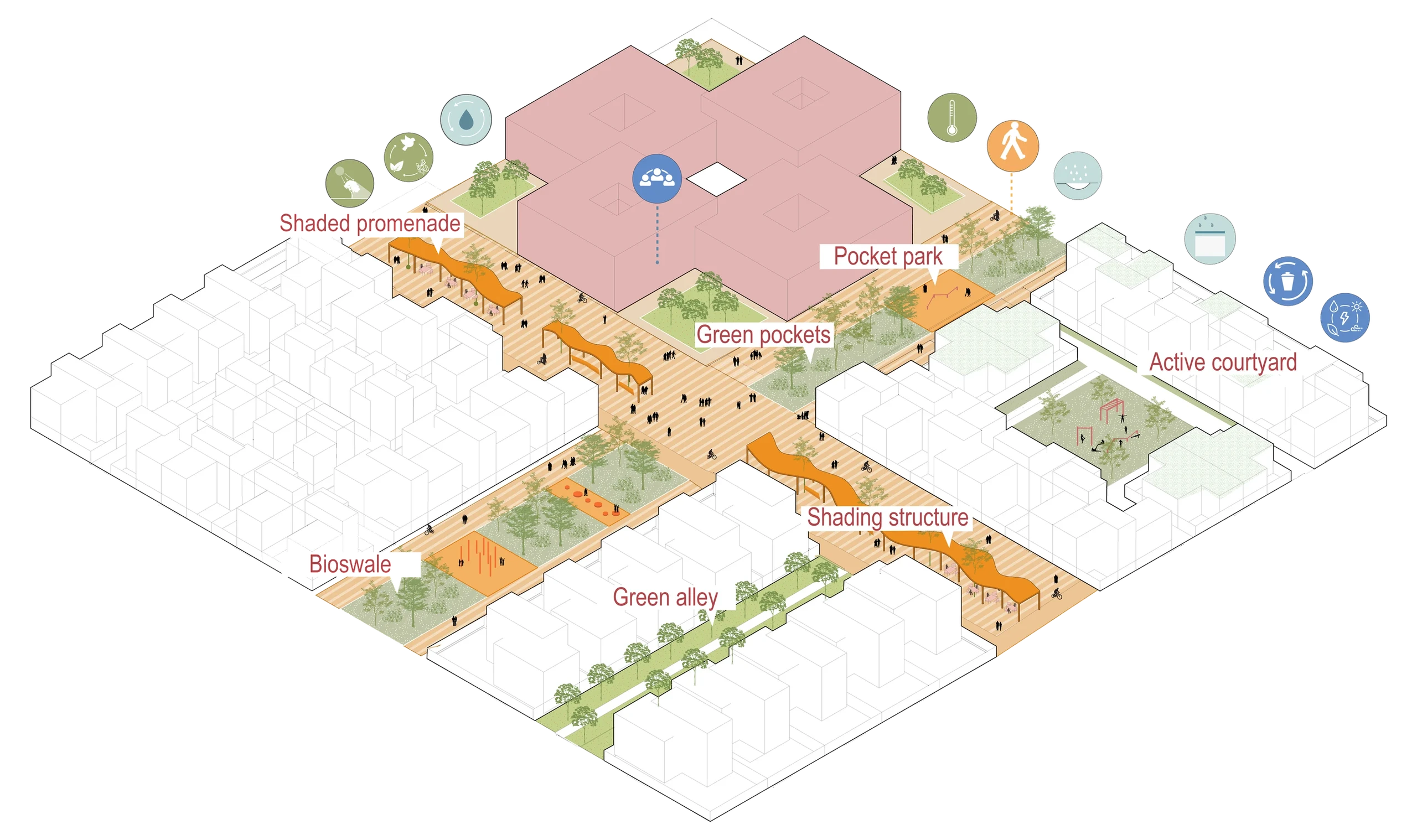
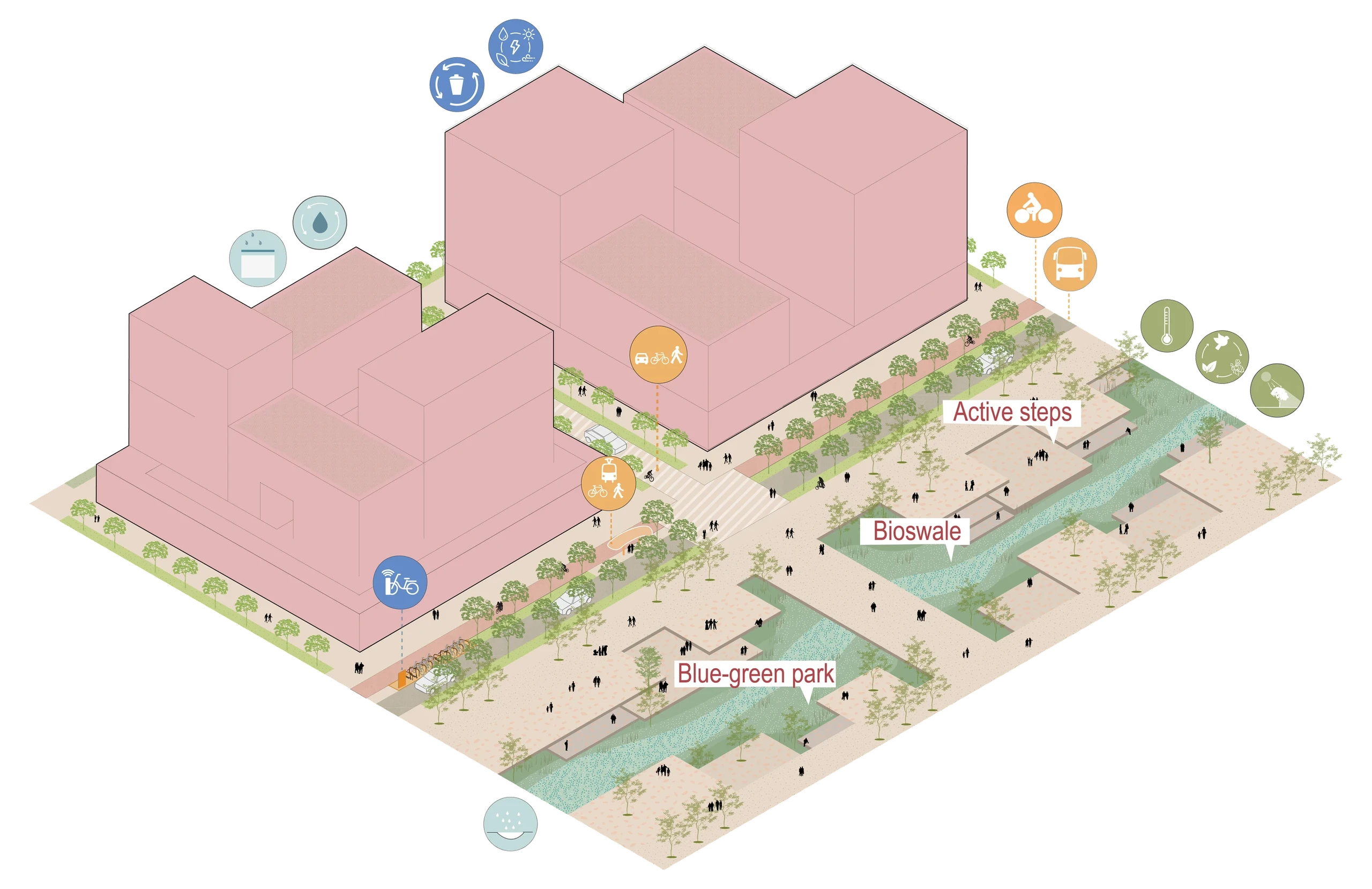
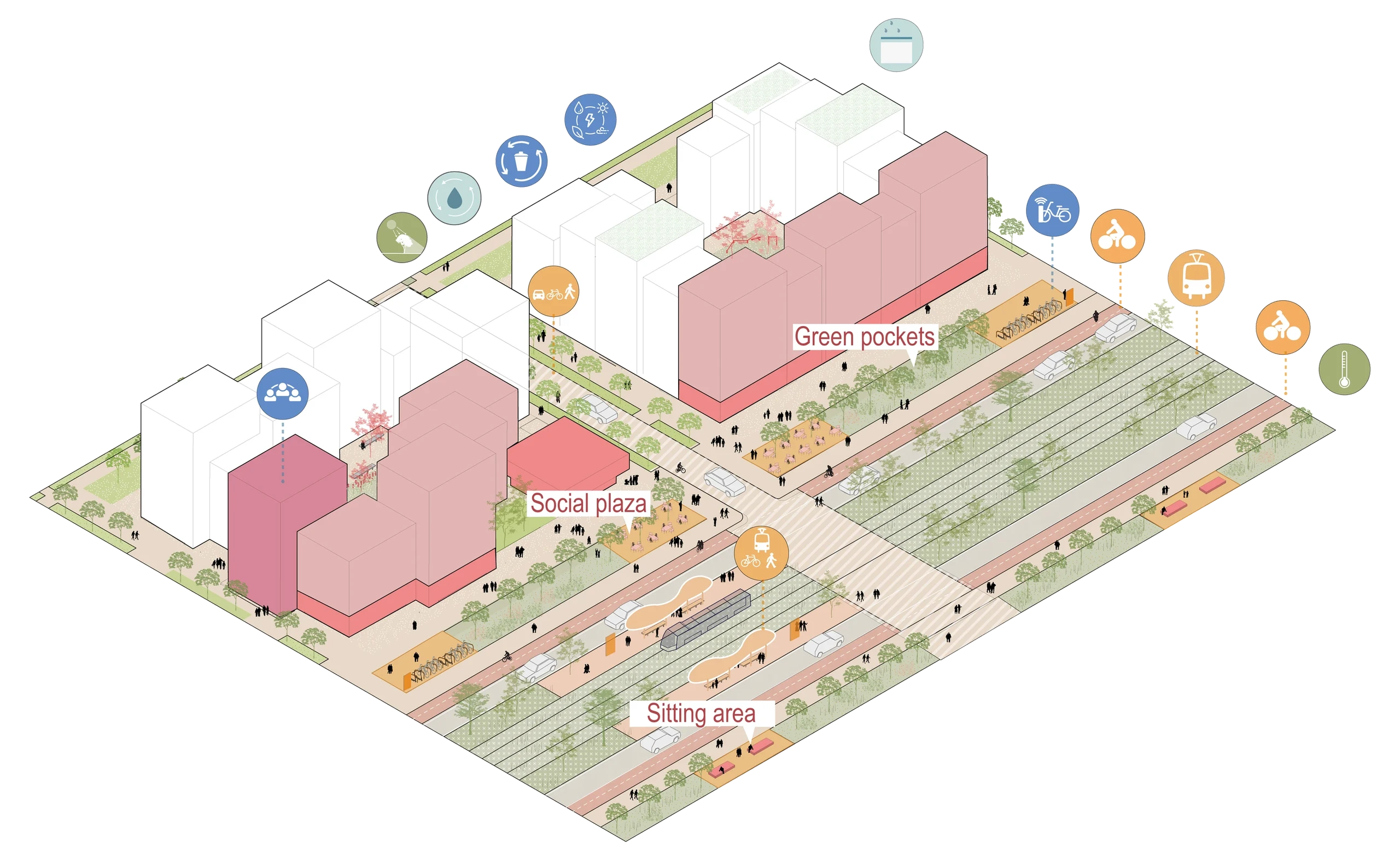
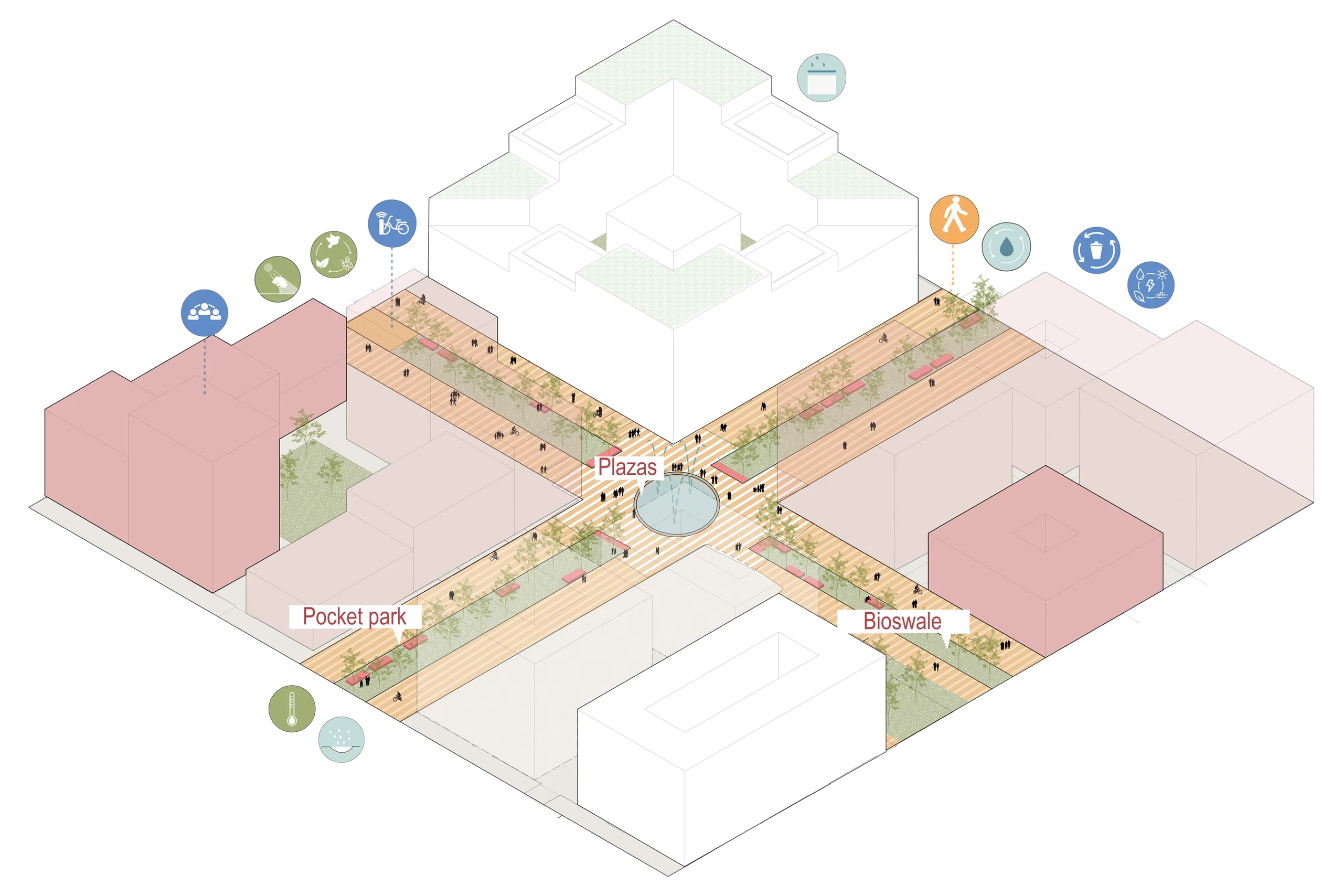
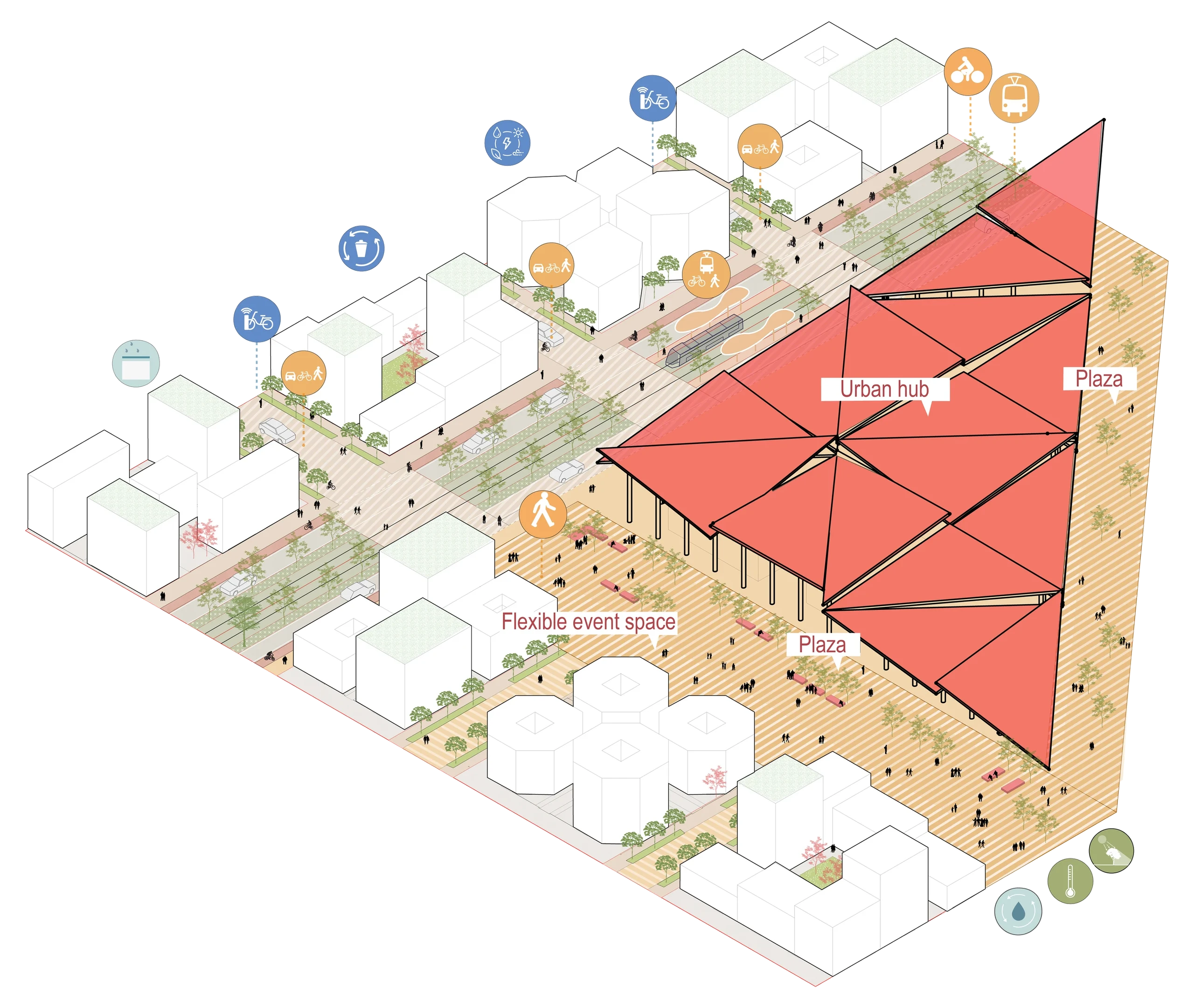
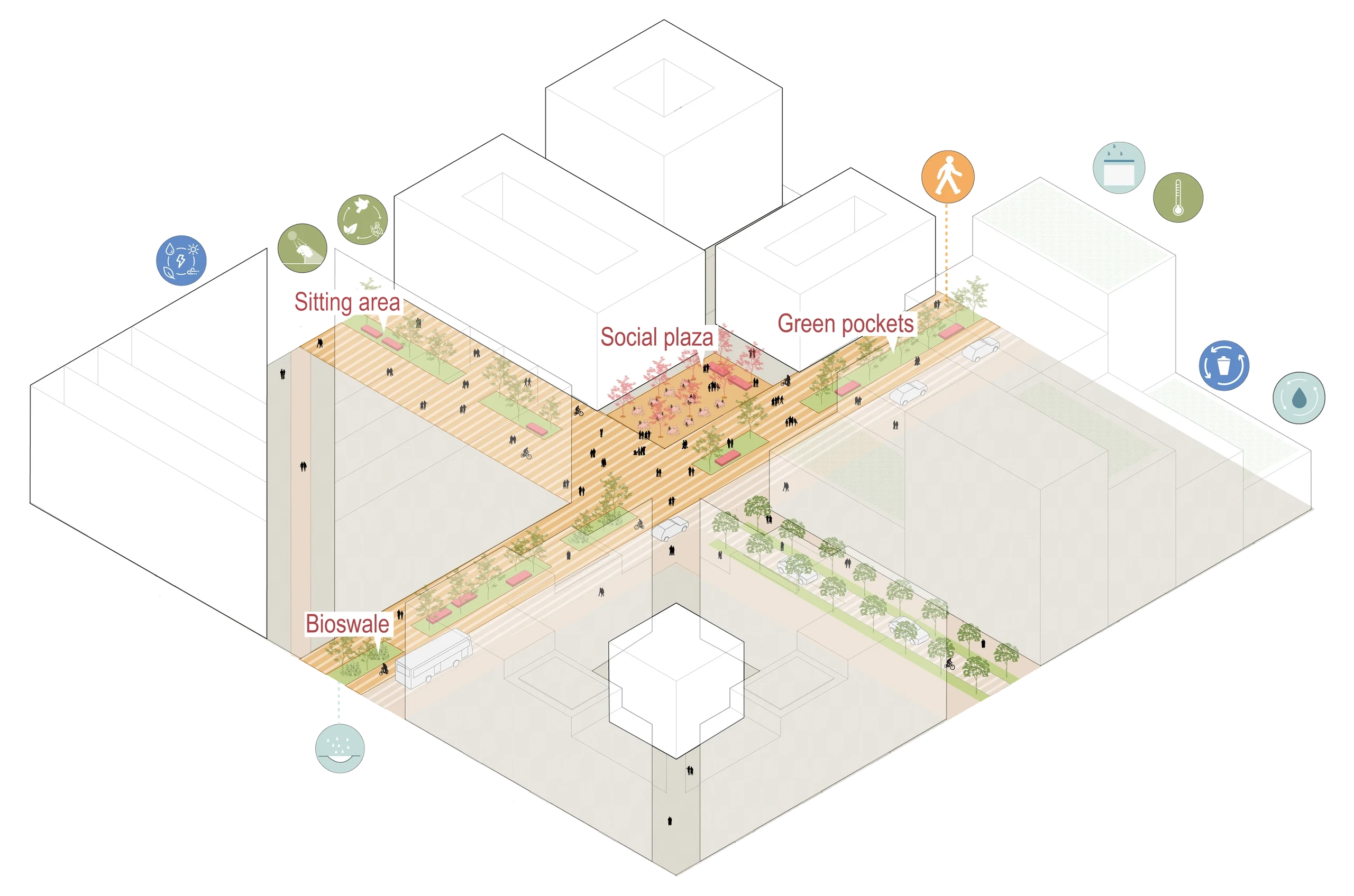
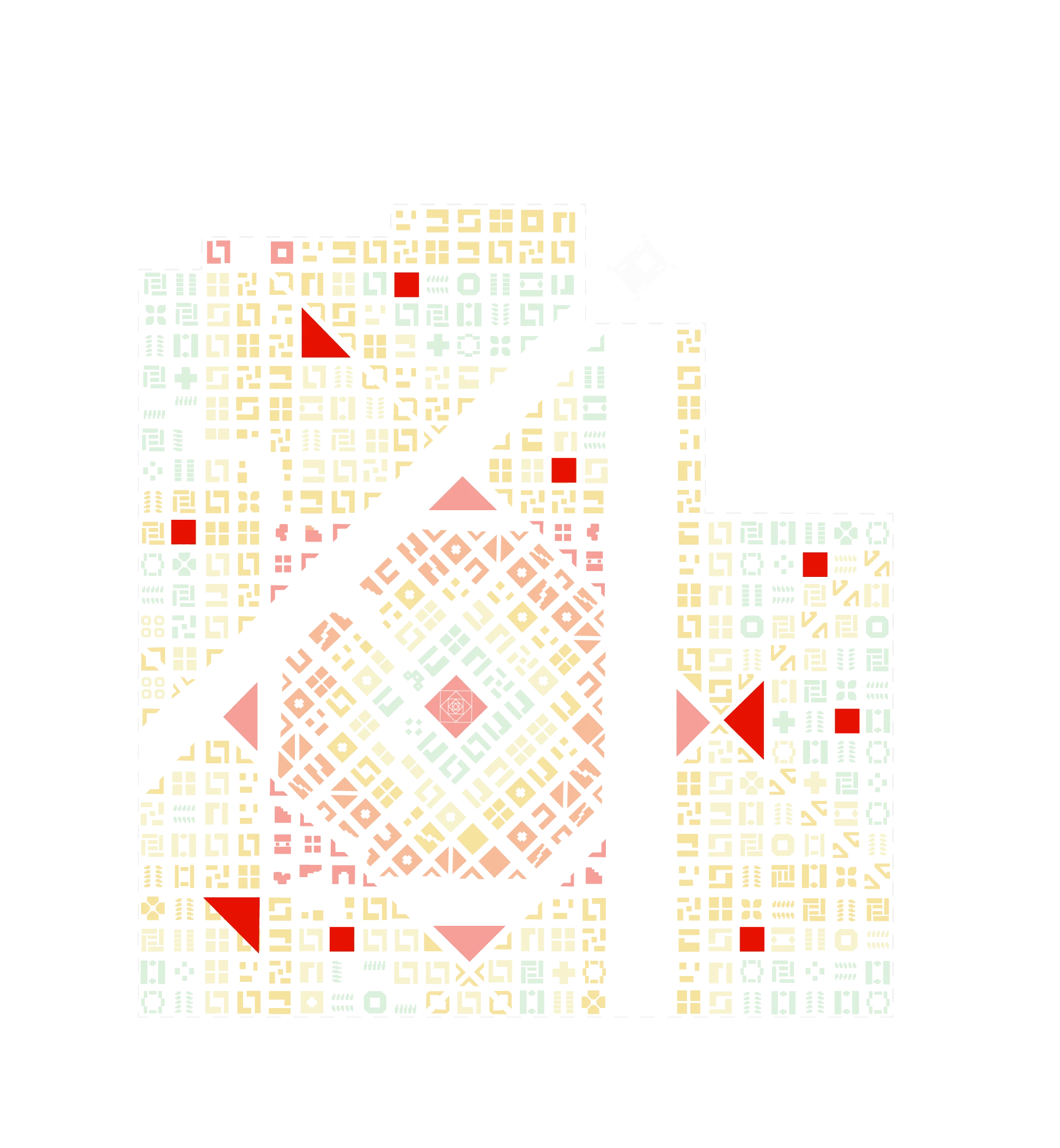
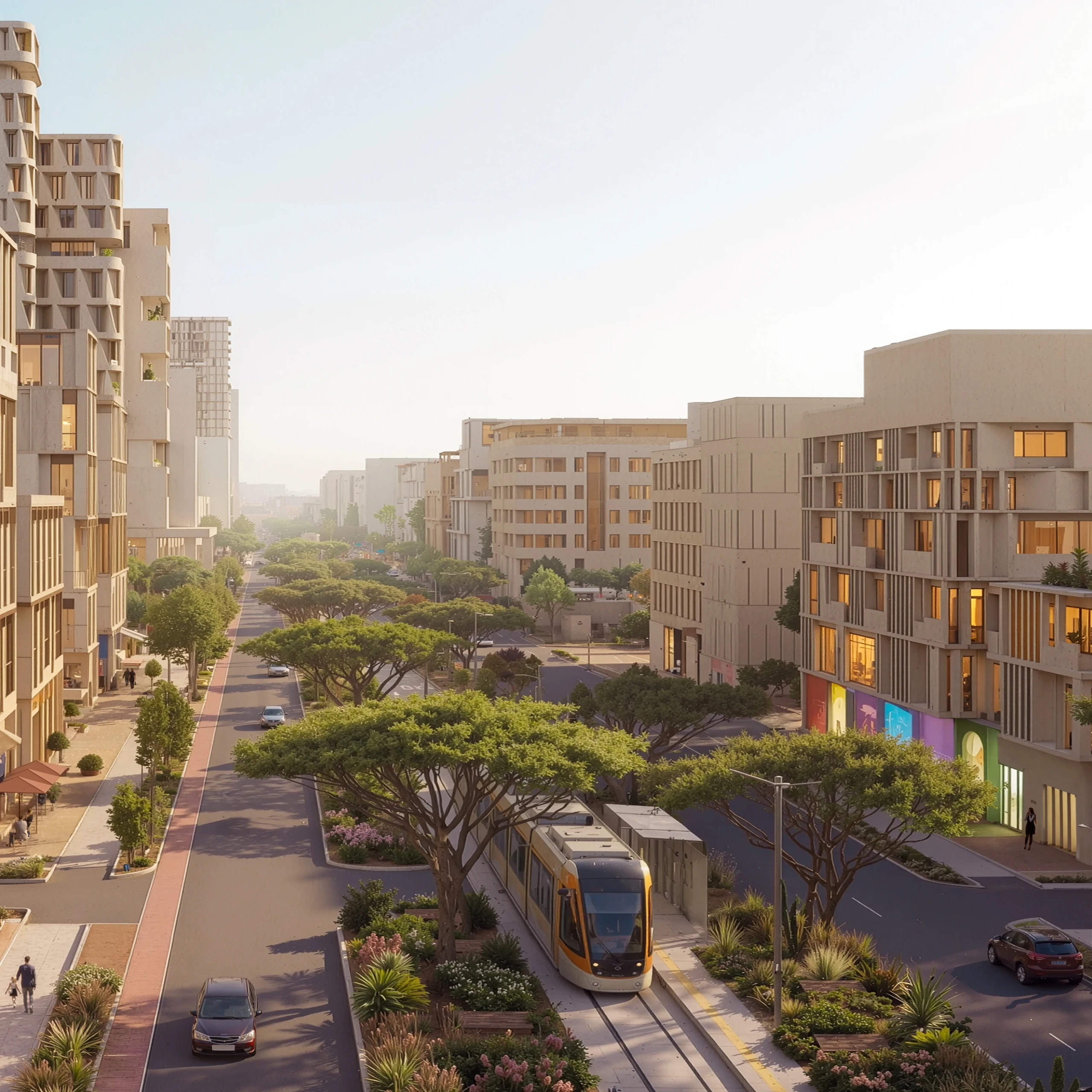
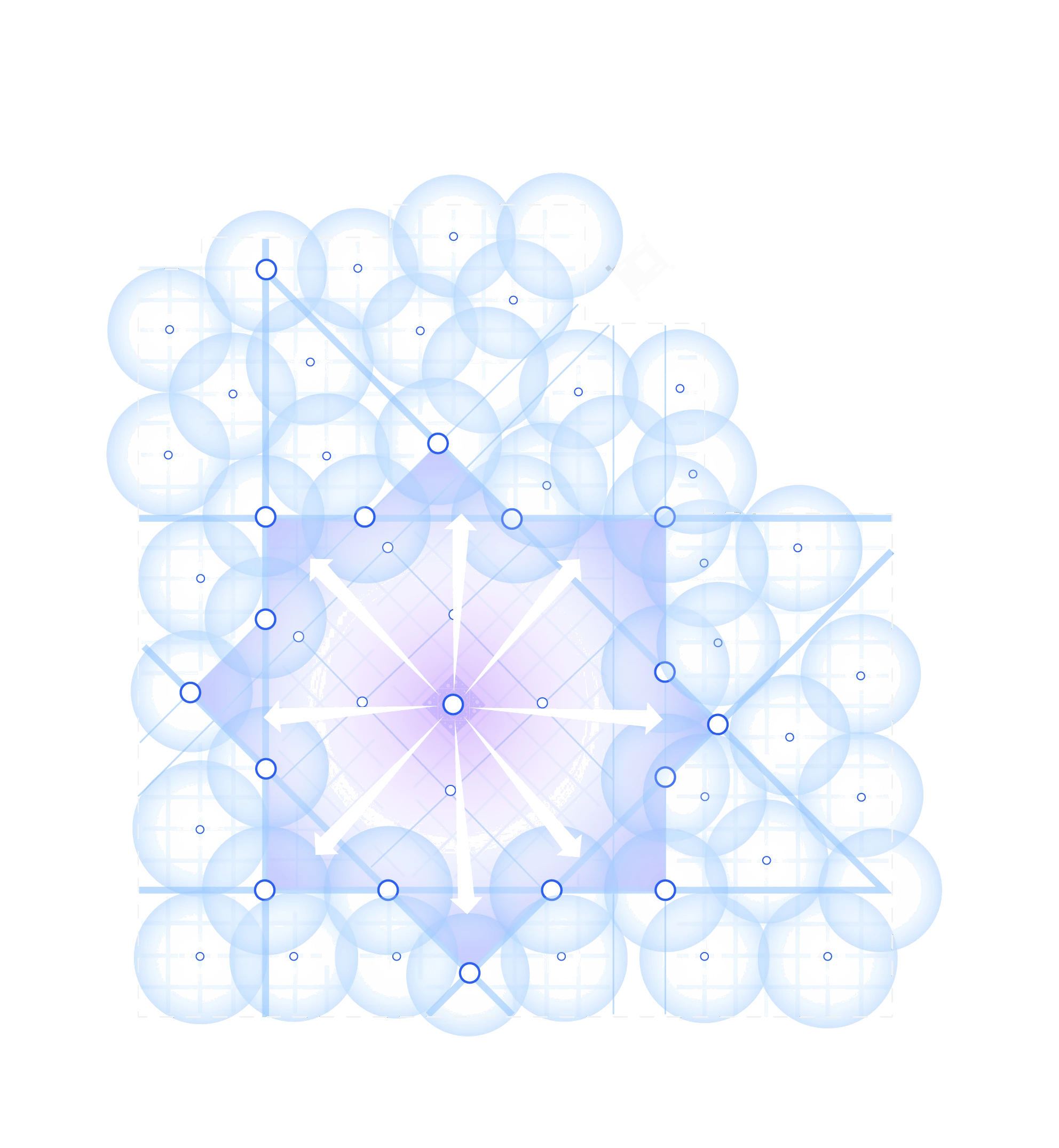
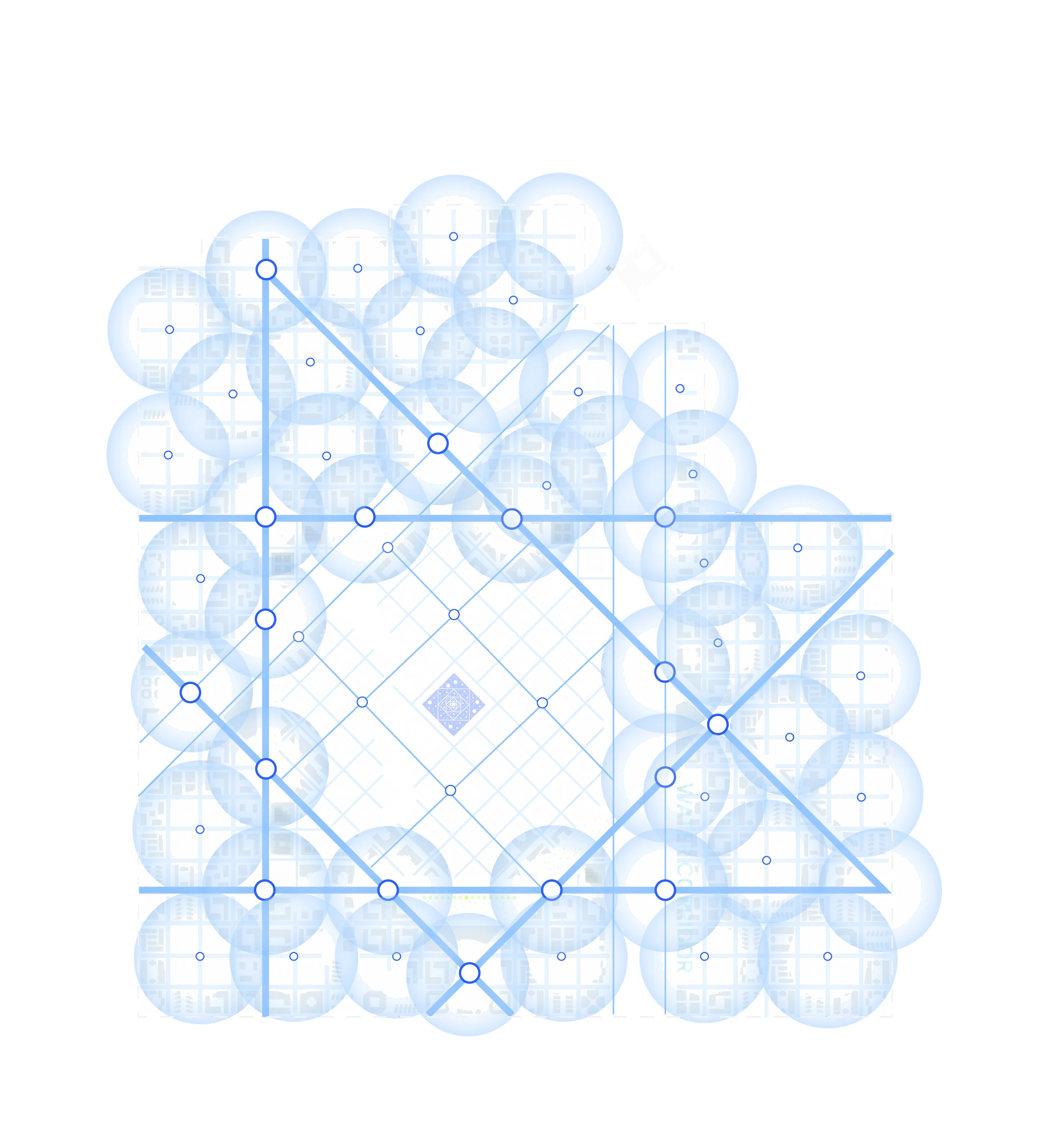
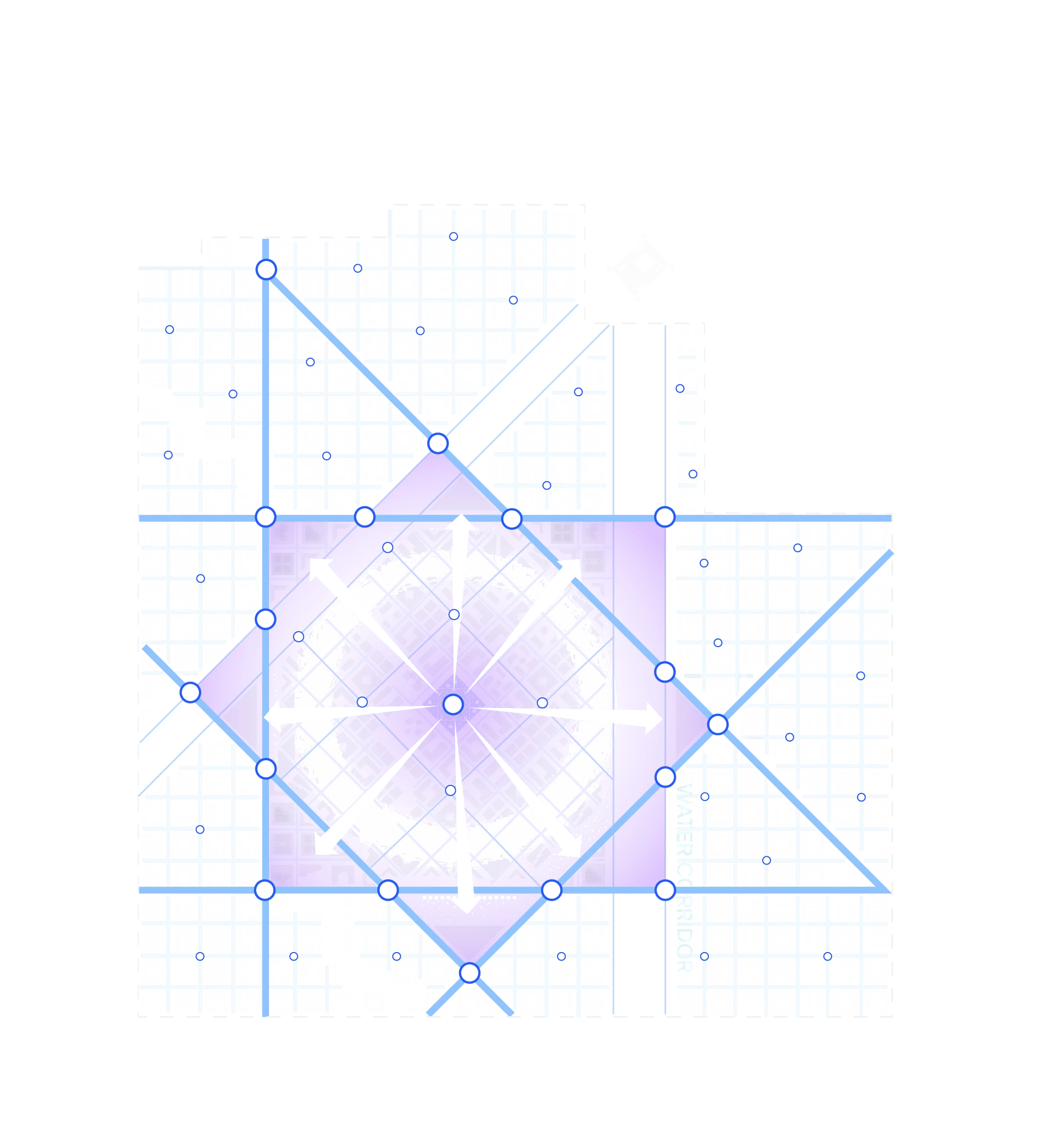
Primary streets define the hierarchy of movement while accommodating active ground floors and shaded pedestrian space. The proposal brings walking, cycling and public transport into these corridors, using their edges to connect mobility with commerce, services and everyday urban life.
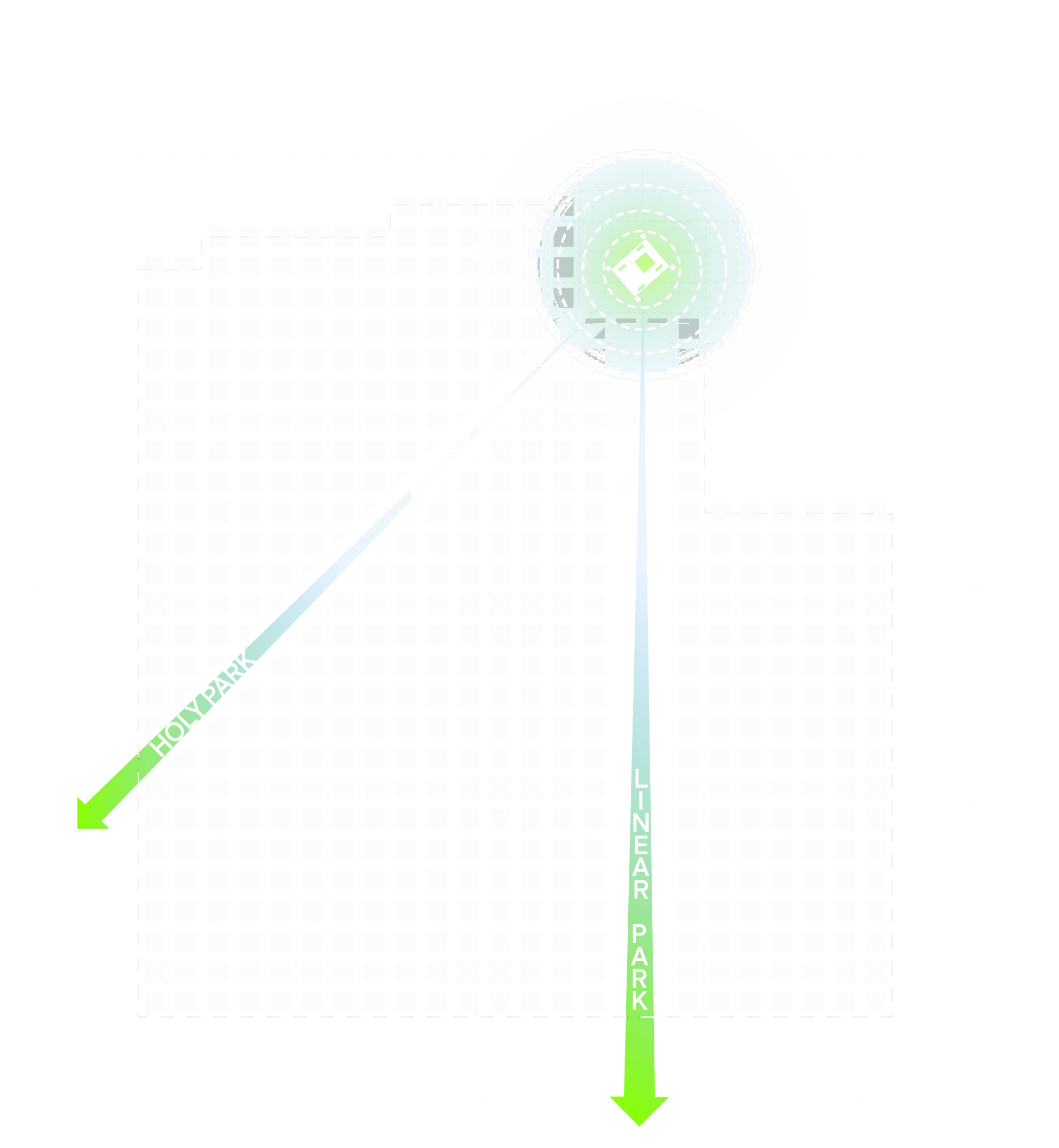
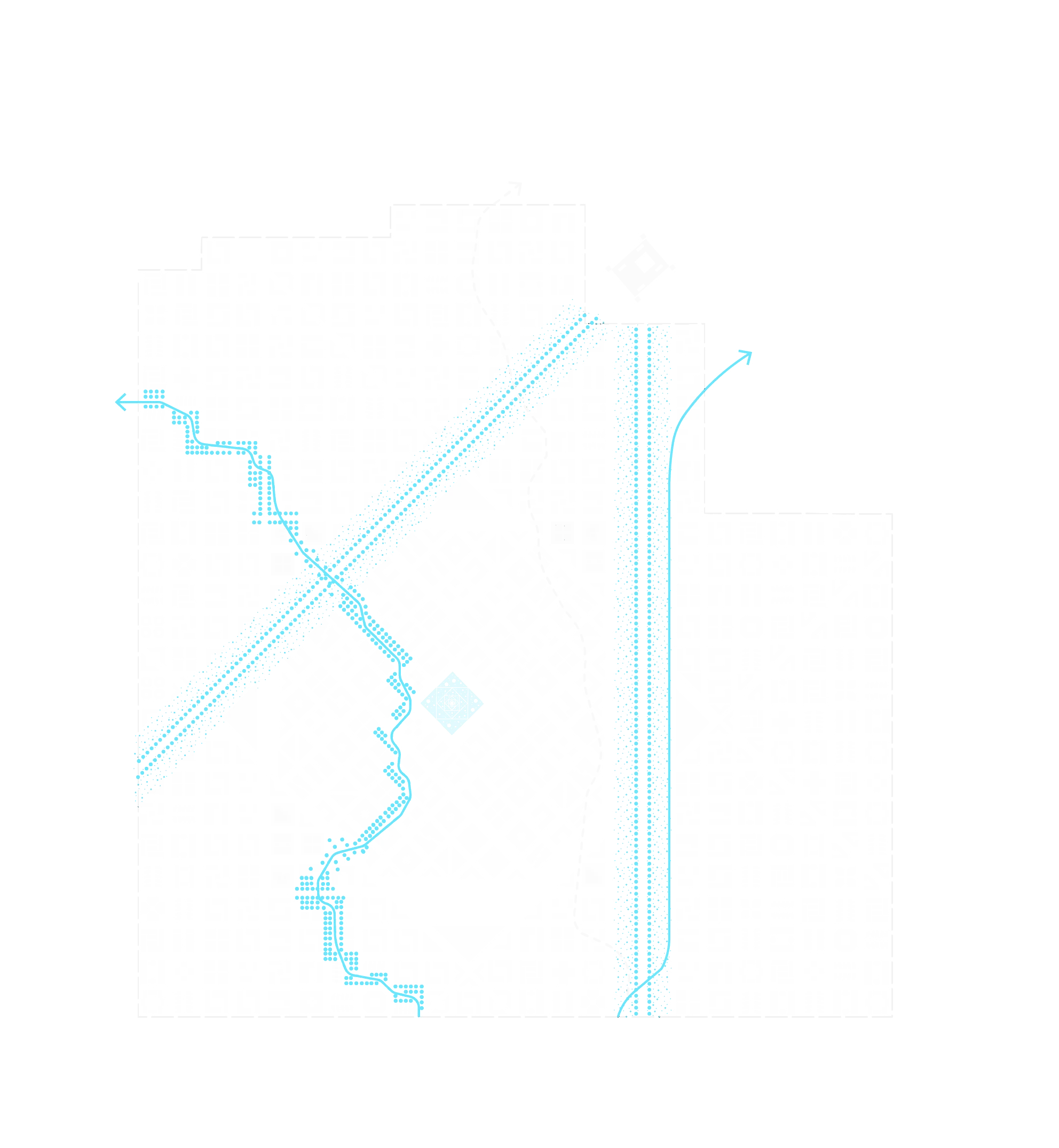
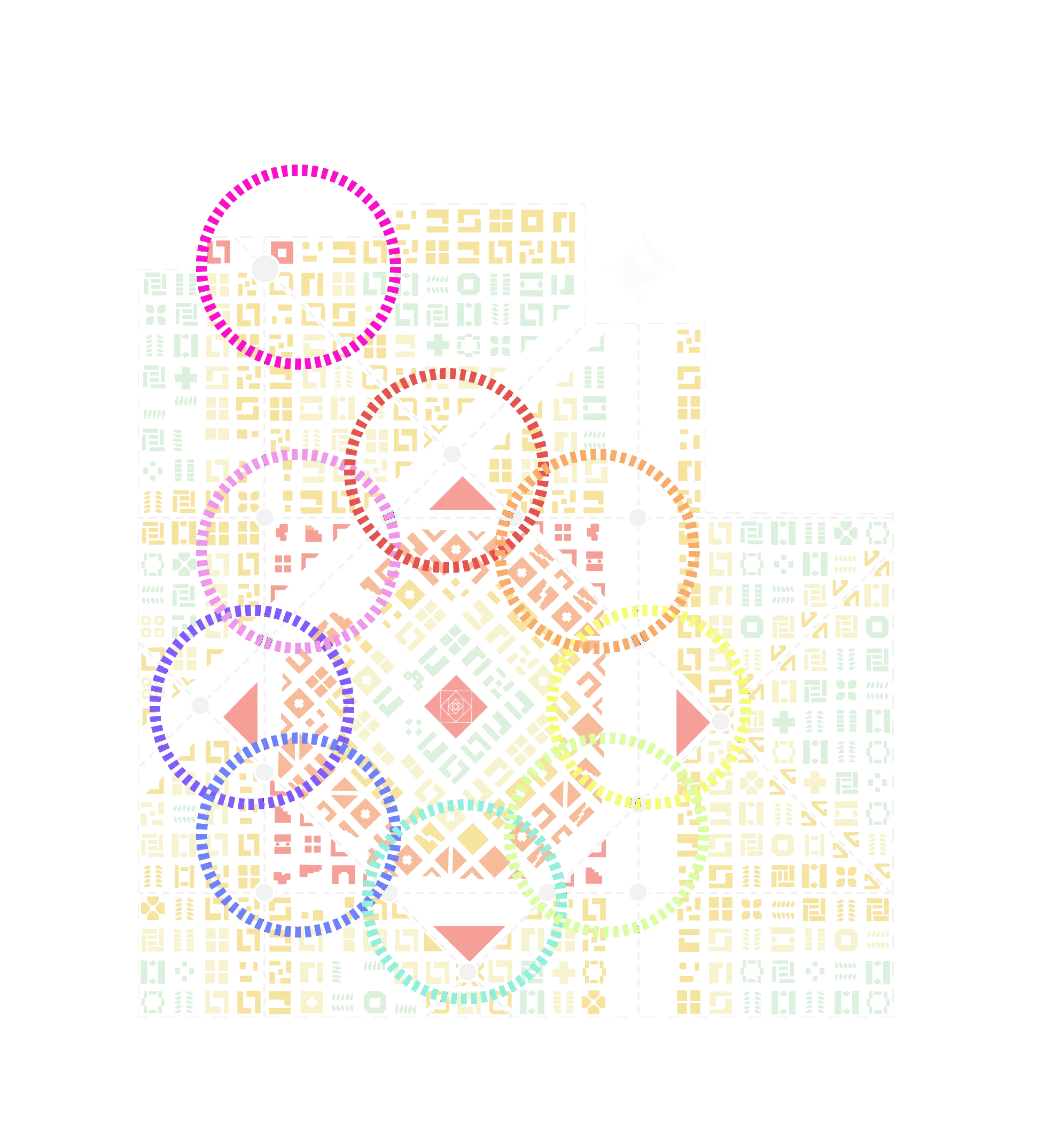
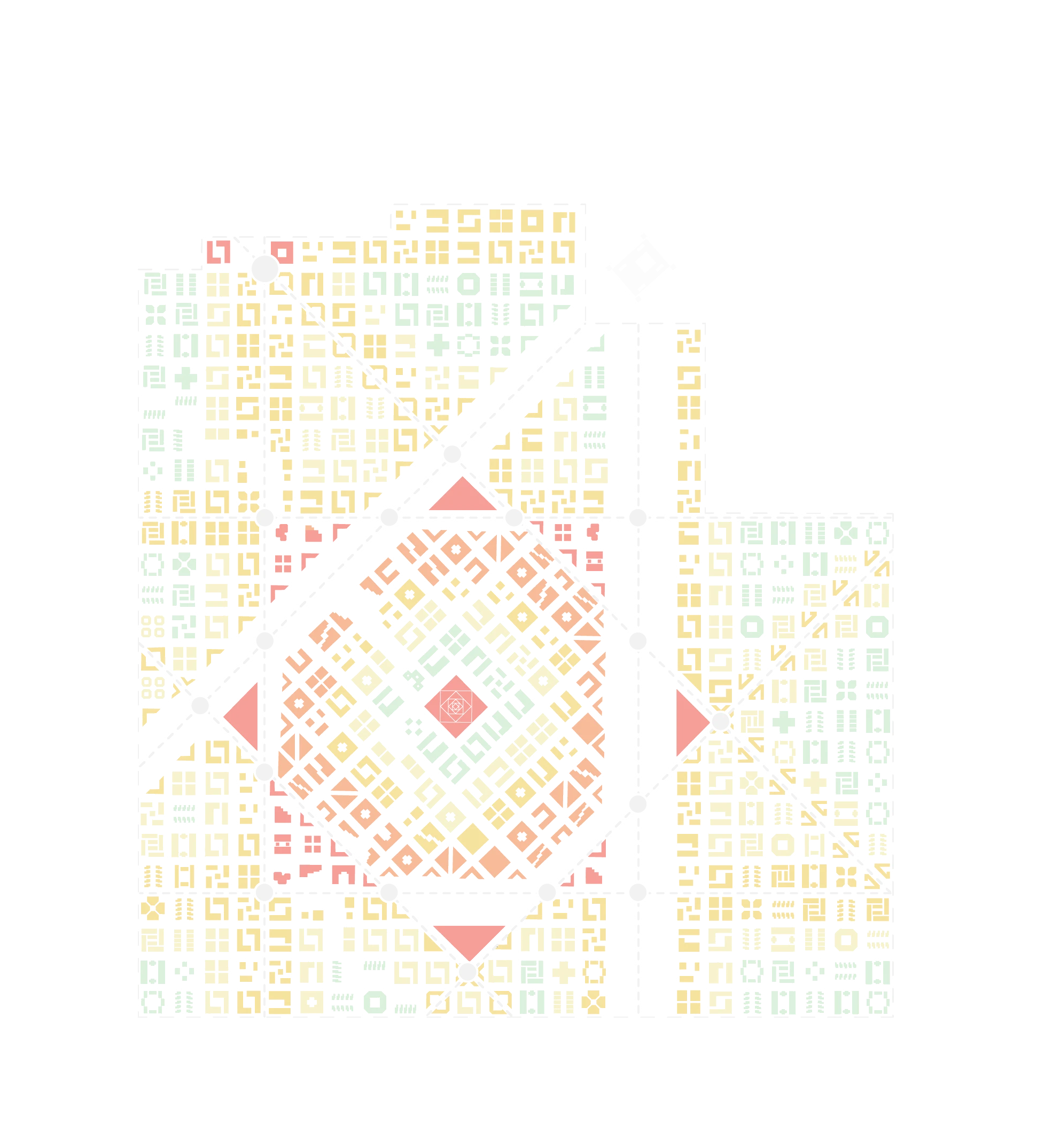
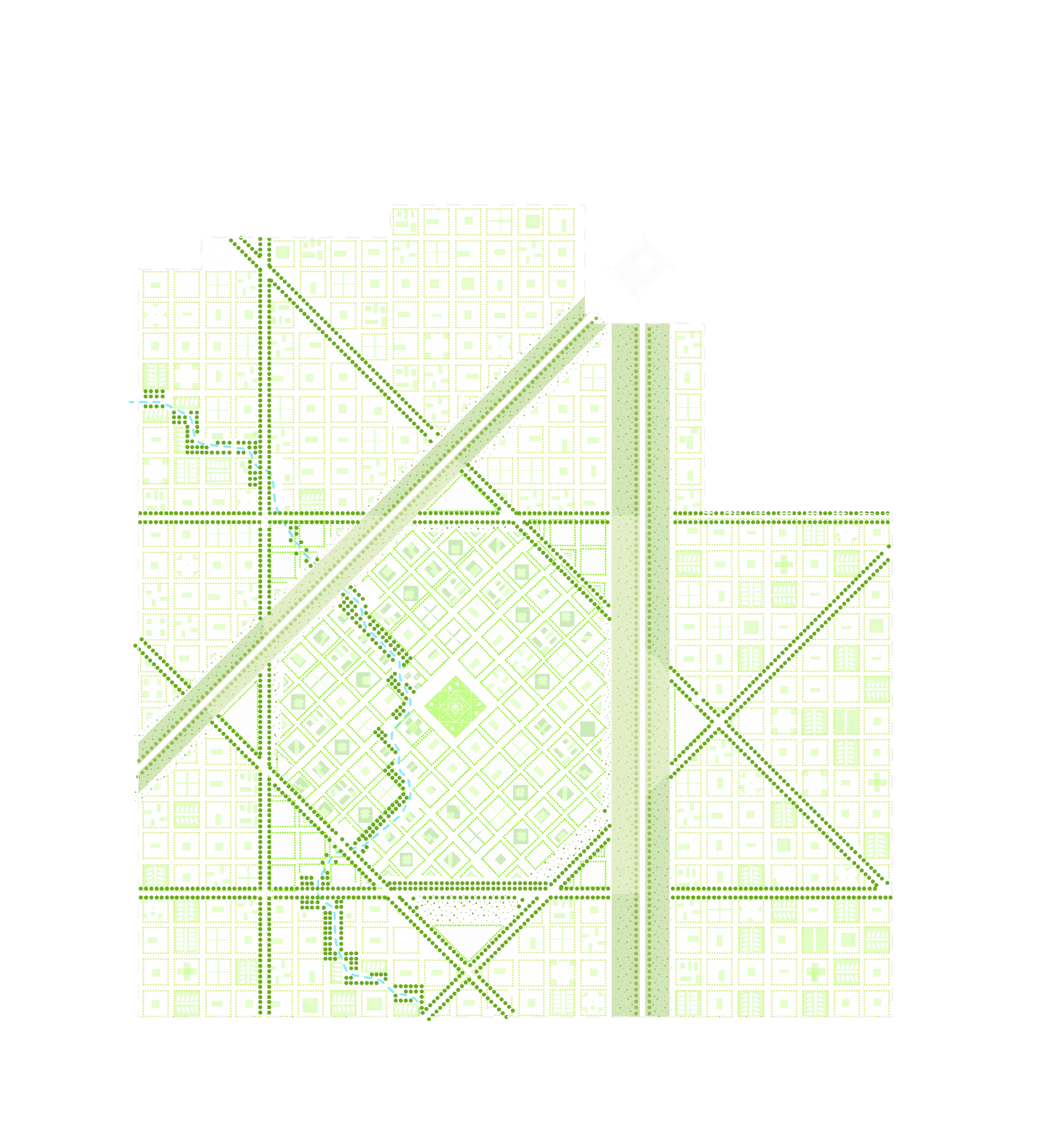
Walking and cycling are organised as connected networks, not isolated leisure routes. Shaded paths link homes with parks, plazas and mobility hubs, while cycle connections follow the landscape and street structure. Public transport is proposed as part of this hierarchy, with waiting areas and shared-mobility services gathered at useful interchange points. The aim is to make the everyday journey part of the public realm and to offer alternatives to an entirely car-oriented pattern of growth.